Key Takeaways
- Choose suppliers with proven production capacity, export logistics, and delivery experience.
- Look for ISO 22000, GFSI, and HALAL certifications to ensure safety and quality.
- Check that nutrition data, calorie ranges (1,200–3,000 kcal), and shelf life are clearly verified.
- Include vegan, vegetarian, and HALAL options to meet diverse dietary needs.
- Ask for multilingual labels, batch codes, and documentation to support traceability.
- Make sure packaging is durable, waterproof, and includes a flameless heater for field use.
Understanding the Stakes: Why Your Sourcing Decision Matters
In military deployments, humanitarian crises, and disaster response operations, food is not just a commodity—it’s a lifeline. When that lifeline breaks, the consequences ripple through entire missions.
Military food security research demonstrates that disruptions in ration supply chains significantly impair troop health, morale, and operational effectiveness. In humanitarian contexts, delayed or inadequate emergency food supply can push vulnerable populations deeper into food insecurity, compounding existing crises. During natural disasters, infrastructure failures and market disruptions can quadruple food prices overnight, making reliable pre-positioned ration packs essential for rapid response.
Government and defence procurement officers’ responsibility to prevent these failures begins with every sourcing decision. This guide outlines how to evaluate MRE suppliers with the rigour these environments demand, providing a framework you can apply to any sourcing scenario.
The Procurement Framework: Five Essential Evaluation Criteria
Choosing an MRE meal supplier based on price alone is a gamble that high-stakes operations cannot afford. The right supplier ensures readiness, traceability, and compliance while adapting to diverse operational contexts and dietary requirements. Here’s what matters most:
1. Supplier Reliability and Production Capacity
Before evaluating individual products, assess whether a supplier can deliver at scale, on time, and under pressure. Key indicators include:
Certified Production Infrastructure:
Look for suppliers operating audit-ready facilities with documented quality management systems. Scalable production lines and established logistics networks enable consistent fulfilment of high-volume government tenders, even in time-sensitive scenarios.
Export-Ready Fulfilment Capabilities:
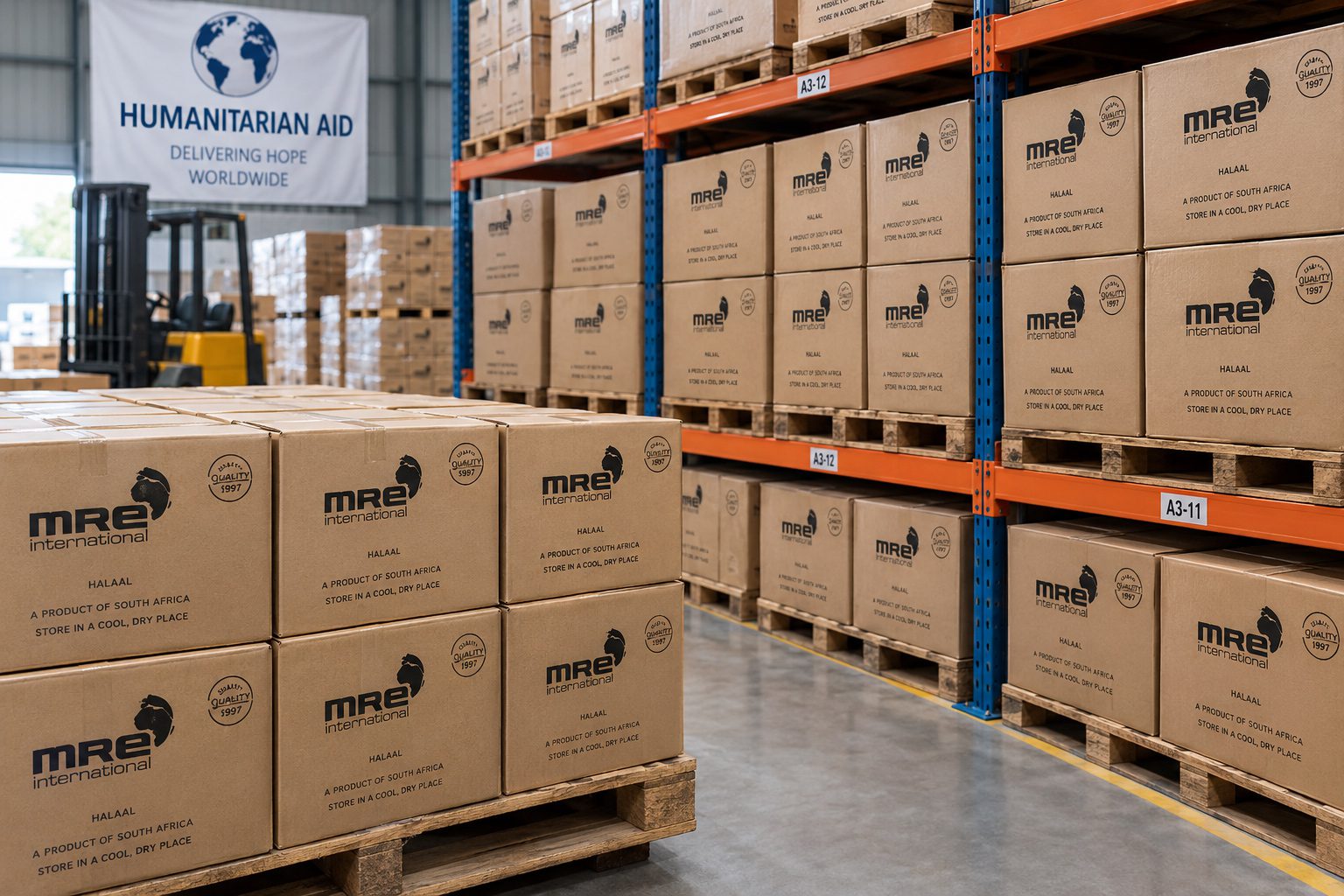
International operations require seamless cross-border logistics. Your MRE supplier should coordinate full container load (FCL) and less-than-container load (LCL) shipments as standard, with road and sea freight included and air freight available on request.
Essential export documentation, such as invoices, packing lists, and certificates of origin, should be provided without friction, with optional freight forwarding support available by prior arrangement.
Cold Chain-Free Storage:
Ambient storage requirements eliminate refrigeration dependencies during transit and distribution, reducing operational complexity in remote or compromised environments. Verify that products maintain stability across temperature extremes without specialised handling.
Track Record:
Prioritise suppliers with proven delivery under operational stress. Decades of experience supporting governments, defence forces, and humanitarian agencies demonstrates the institutional knowledge needed to anticipate and solve field-level challenges.
2. Certification and Food Safety Assurance
Compliance with internationally recognised food safety protocols is non-negotiable. Your MRE documentation should adhere to:
- ISO 22000 food safety management systems
- GFSI-aligned protocols for hazard control and hygiene standards
- HALAL certification when operating in regions with religious dietary requirements
These certifications aren’t bureaucratic formalities; they’re insurance against health crises that can derail entire missions.
3. Nutritional Integrity and Shelf Stability
A soldier on patrol and a family displaced by disaster both need consistent, safe, and nourishing food. Your supplier should provide:
Flexible Calorie Configurations:
Different mission profiles require different energy densities. Look for options ranging from 1,200 to 3,000 kcal per pack, allowing you to match rations to activity levels and deployment duration.
Verified Nutrition Facts:
MRE nutrition facts should be available per SKU, with transparent macronutrient profiles and ingredient lists. This enables dietary planning and accommodates medical restrictions within your personnel or beneficiary population.
Extended Shelf Life:
Verified shelf lives of 24 to 36 months without cold chain dependence ensure stockpile viability and reduce waste. Batch testing under heat, humidity, and transport stress should be standard practice, with documentation available upon request.
Balanced Meal Composition:
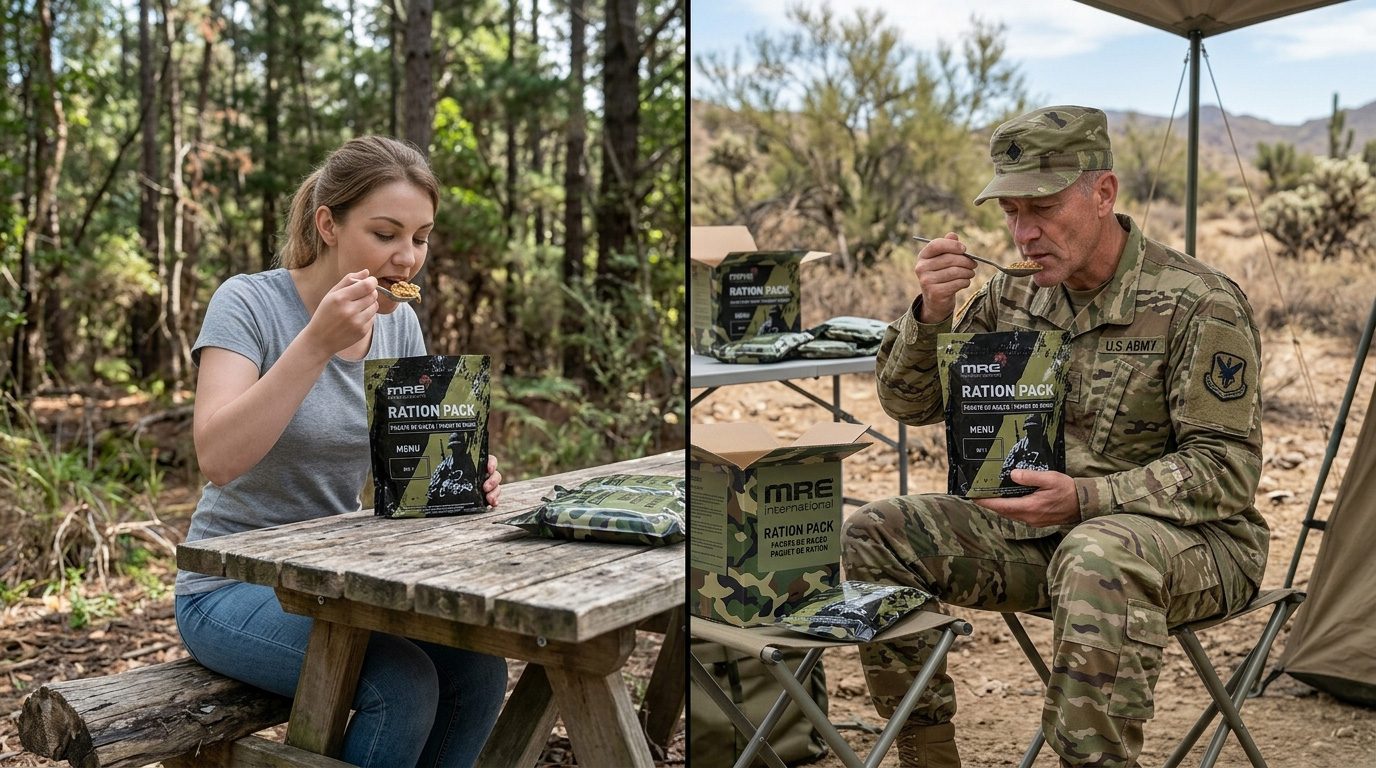
Each MRE package should include an entrée, main dish, snacks and isotonic drinks to deliver complete nutrition. Integrated components, such as utensils, seasonings, and a flameless ration heater for cold environments, eliminate dependencies on external resources.
4. Operational Fit – Packaging and Dietary Inclusivity:
Every MRE must withstand transport, storage, and consumption in harsh environments while meeting the cultural and dietary needs of diverse populations.
Field-Ready Packaging:
Specify tamper-evident, waterproof packaging with high heat resistance. Each meal should arrive as a self-contained unit, requiring no additional equipment or preparation beyond the included flameless ration heater.
Inclusive Meal Options:
Operations across Africa, the Middle East, and Asia require culturally appropriate meals. Inadequate planning results in rejected rations, wasted resources, and reputational damage. Ensure your supplier offers:
- Vegan MRE and vegetarian options for diverse dietary practices
- HALAL-certified packs for Muslim-majority regions
- Allergy-aware packaging with multilingual labelling
Customisable Ration Packs:
Mission requirements vary. Your supplier should configure packs by calorie count, dietary type, regional preference, or deployment duration. Common applications include tactical field kits for border deployments, emergency aid distributions for drought or flooding response, and NGO provisioning for mobile clinics or temporary shelters.
5. Traceability, Documentation, and Accountability
Procurement teams must demonstrate accountability throughout the supply chain. Your MRE supplier should support this through:
Comprehensive Labelling:
Multilingual labels with full ingredient transparency enable audit compliance and beneficiary trust. Pack-level coding on every MRE case allows batch tracking from production to consumption.
Donor Branding Capabilities:
For NGO and donor-funded operations, custom-branded MREs ensure visibility and attribution. Culturally aligned instructions and ingredient transparency satisfy donor reporting requirements and field-level acceptance.
Supply Chain Documentation:
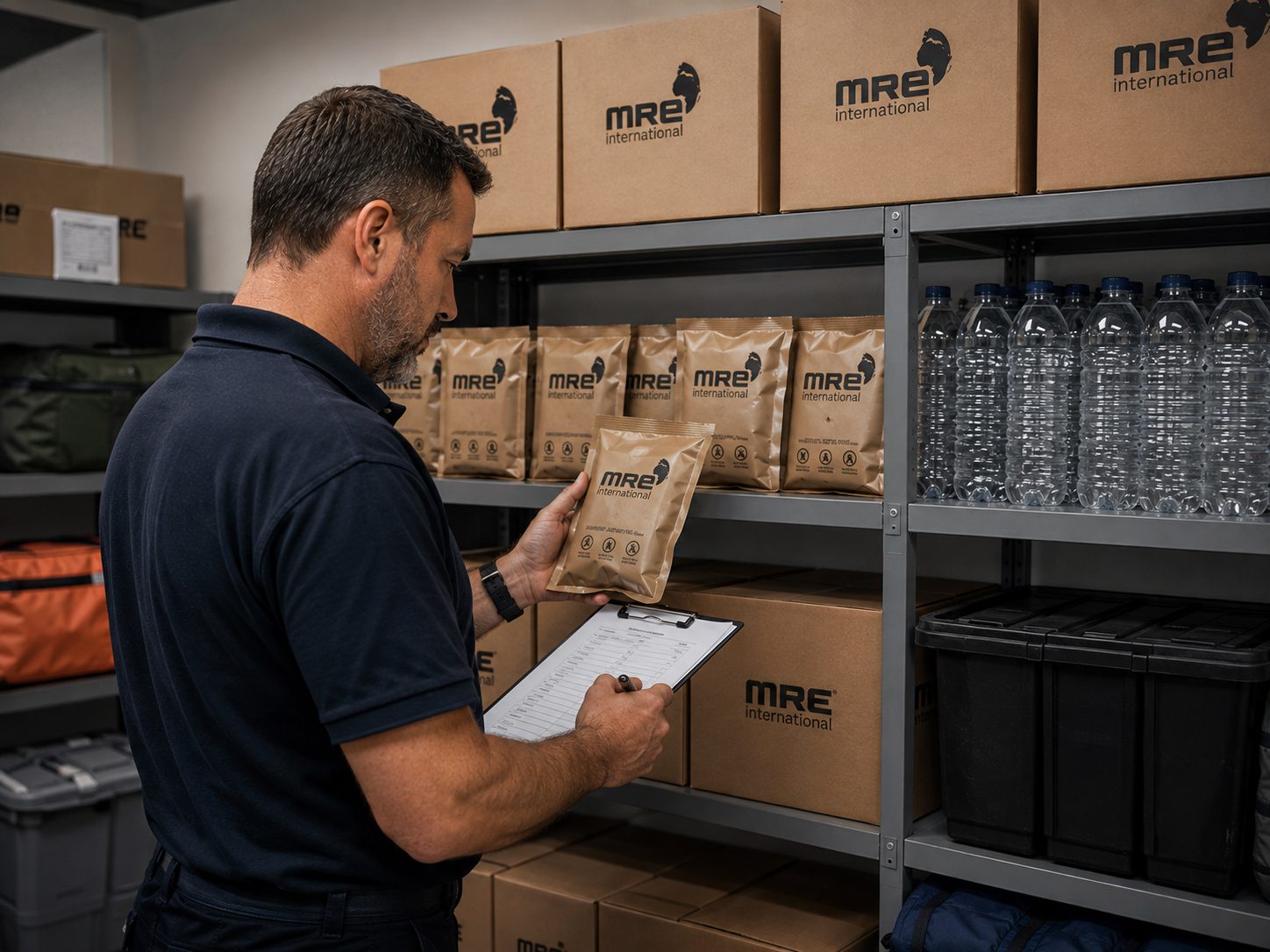
Serial tracking, certificates of compliance, and production records should be available on request. This documentation protects your organisation during audits and demonstrates due diligence to oversight bodies.
Putting It Into Practice: Mission-Aligned Procurement
The framework above provides evaluation criteria, but your application will depend on your specific operational context:
Military and Defence Applications:
Prioritise calorie density, shelf stability, and packaging durability. Ensure supplier capacity for sustained, high-volume delivery to forward operating bases with unpredictable logistics windows.
Humanitarian and Disaster Response:
Focus on rapid deployment capability, cultural appropriateness, and donor documentation. Verify that suppliers can accommodate branded emergency meal solutions with short lead times.
Government Stockpiling:
Emphasise extended shelf life, ambient storage compatibility, and scalable replenishment contracts. Assess supplier financial stability to ensure long-term partnership viability.
Making the Decision That Protects Your Mission
Selecting an MRE supplier requires more than meeting minimum criteria. It is a critical decision that affects morale, health, and mission success. As a procurement officer, you need more than food—you need certainty.
Use this framework to evaluate suppliers systematically:
- Verify production capacity and export logistics before considering products
- Demand certifications and nutritional documentation as baseline requirements
- Assess cultural and dietary inclusivity relevant to your deployment regions
- Ensure traceability and compliance support for accountability
- Test packaging and shelf stability claims through sample evaluation
Looking for an MRE Supplier That Ticks All the Boxes?
If you’re seeking an MRE supplier with proven production capacity, comprehensive certifications, and a track record of delivery under pressure, MRE International has supported governments, defence forces, and humanitarian agencies for over four decades. Operating from a certified facility in South Africa with export-ready logistics across Africa and international regions, the company applies the framework outlined in this guide to every mission-critical deployment.
To discuss procurement readiness or explore the full range of mission-aligned MRE options, book a consultation or review Emergency Meal Solutions.