Building Special Dietary Requirements Into Procurement
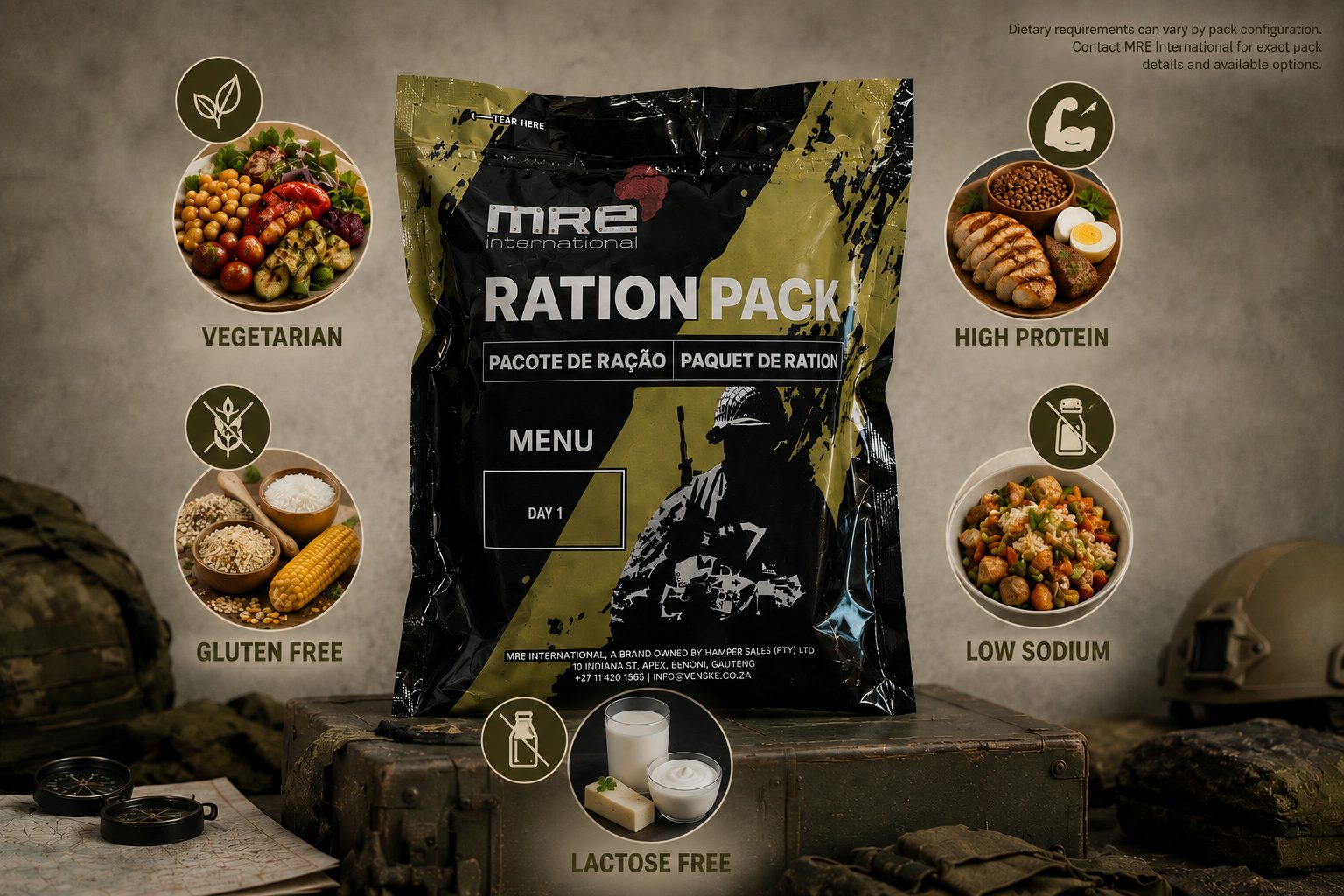
Dietary diversity should form part of the procurement specification from the beginning.
Humanitarian buyers can specify:
- Required menu categories
- Quantities of each menu
- Dietary restrictions
- Certification requirements
- Nutritional expectations
- Allergen information
- Shelf-life requirements
- Pack duration
- Packaging and labelling
- Delivery requirements
This gives suppliers enough information to recommend suitable MRE packs or develop customised configurations while helping procurement teams maintain control over the overall feeding plan.
Planning Halal Requirements Across the Complete Pack
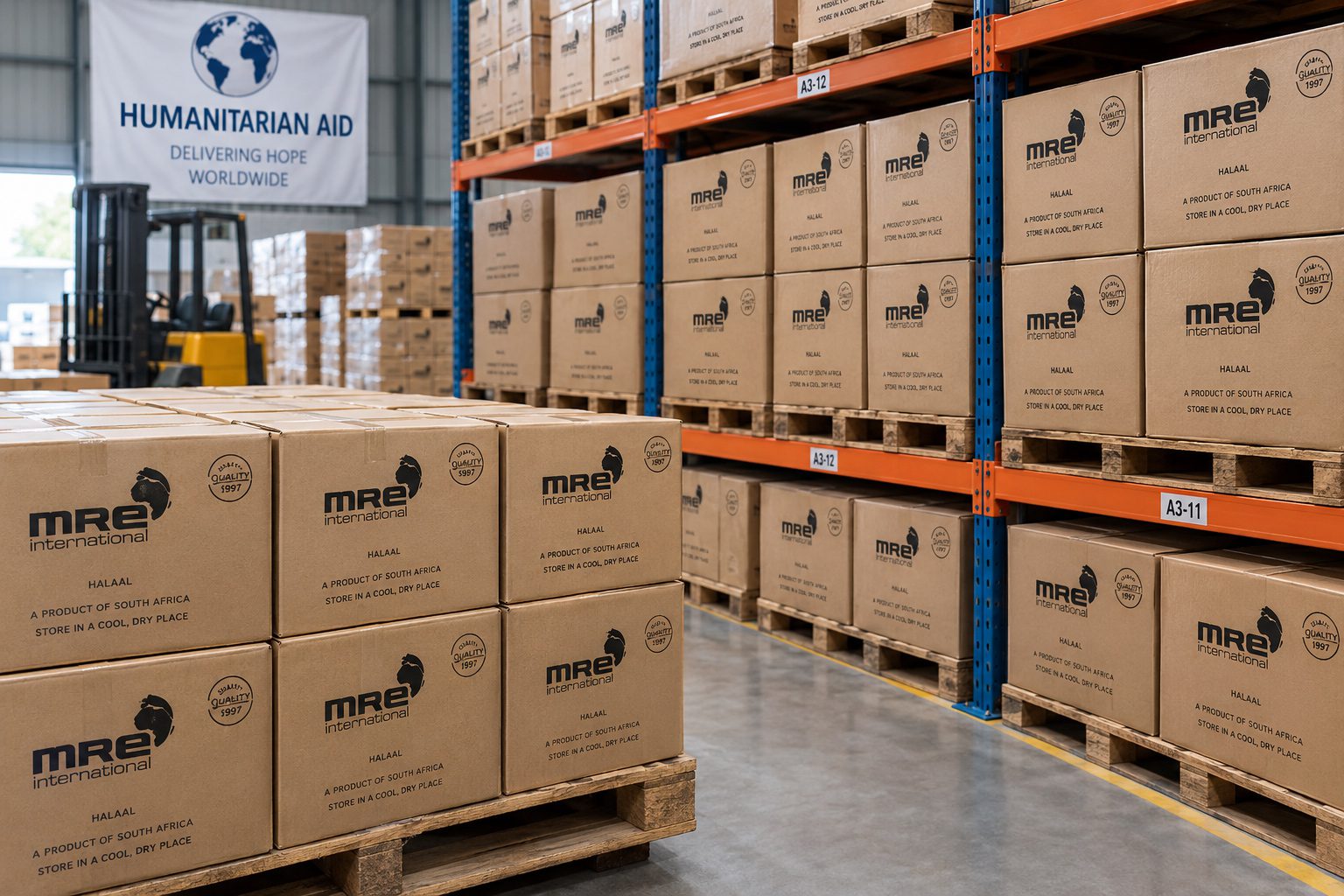
Where halal food is required, organisations should consider the entire ration rather than only the main meal.
An MRE pack may contain entrées, snacks, drinks, spreads, desserts and seasonings. Relevant components should therefore be checked when halal certified products are specified.
Procurement teams should request appropriate certification and product information from suppliers, particularly when a ration is assembled using items from multiple manufacturers.
The number of halal menu configurations required should then be incorporated into the wider ration plan alongside standard and other specialist options.
Manage Gluten Free and Allergen-Sensitive Rations Carefully
Specialist dietary requirements require clear product identification.
A meal should not be assumed to be gluten free simply because the main ingredients appear suitable. Product specifications and allergen declarations should be reviewed across the full pack.
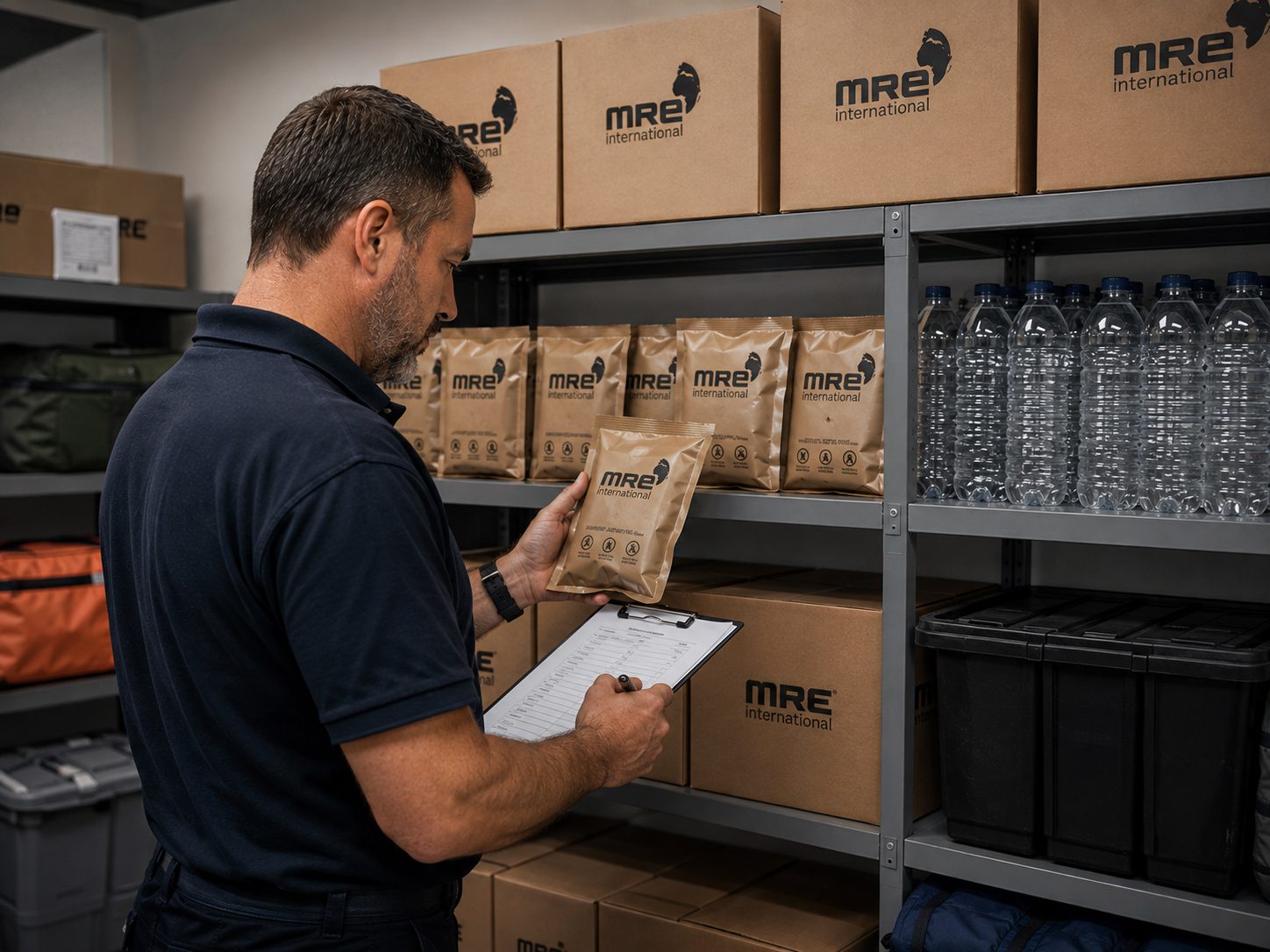
Clear identification is equally important during storage and distribution.
Practical measures can include:
- Clearly differentiated labels
- Separate storage areas
- Distribution records
- Staff briefings
- Ingredient information at distribution points
These measures help reduce the risk of specialist rations being allocated to the wrong recipients and allow procurement teams to manage different menu configurations more safely.
Balance Dietary Diversity With Humanitarian Logistics
Every additional ration pack menu creates another product configuration that must be purchased, transported, stored and distributed.
Procurement teams therefore need to balance inclusivity with practicality.
Shelf Life and StorageSpecialist products should have a suitable shelf life for the expected deployment and storage environment. |
TransportPack dimensions and weight become important when thousands of rations must travel by road, sea or air. |
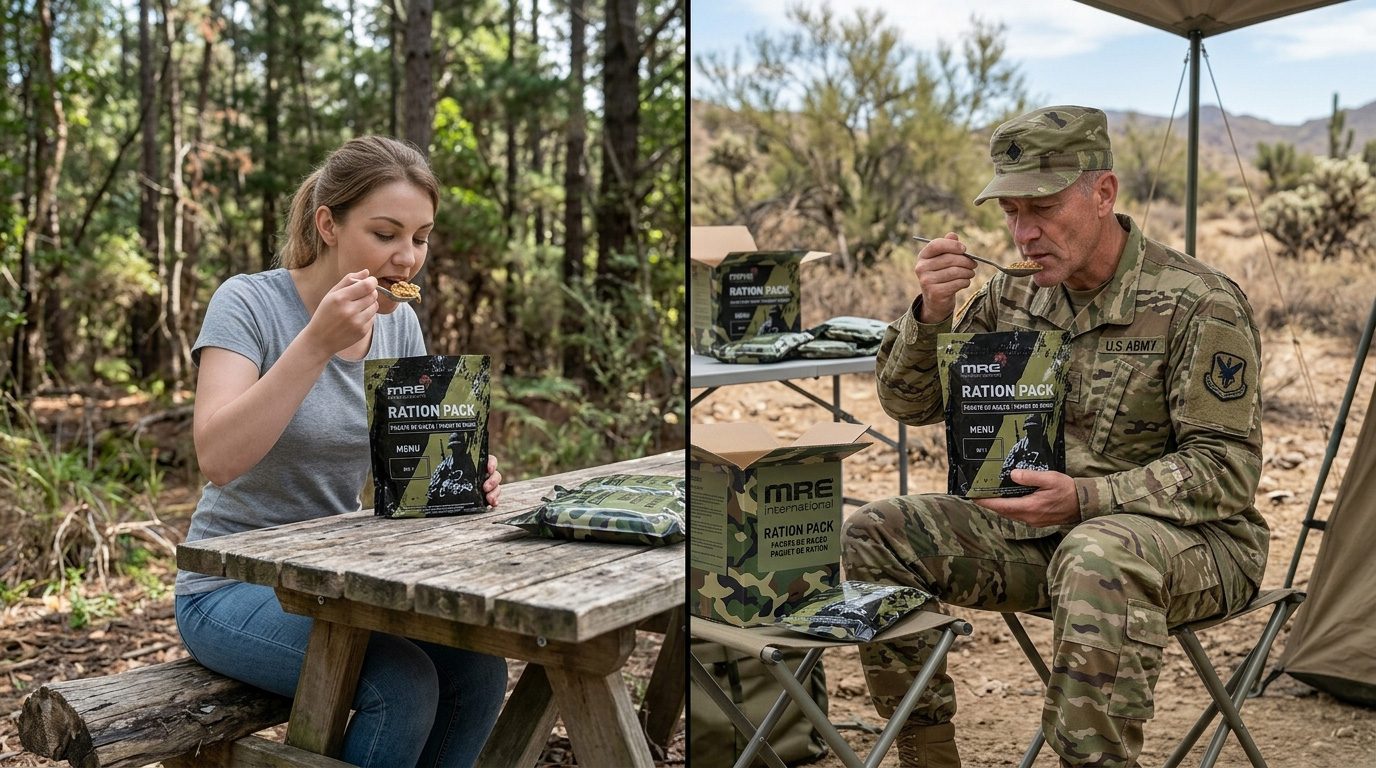
PreparationFood requiring substantial cooking, refrigeration or water may be unsuitable where infrastructure has been disrupted. Shelf-stable MRE packs can help because they minimise dependence on conventional food preparation infrastructure. |
Why Cultural Acceptance Matters
Food needs to be eaten to deliver nutritional value.
A technically suitable ration may still generate waste if its flavours, ingredients or format are unfamiliar to recipients. Understanding local food preferences can therefore improve menu acceptance.
This does not mean recreating an everyday local diet during an emergency. Instead, procurement teams can consider familiar staples, recognised flavours and culturally appropriate ingredients wherever operationally possible.
Providing appropriate food also supports dignity at a time when people may have lost control over many aspects of daily life.
Explore the post on Best MRE Meals: Why Cultural Flavours Matter.
Adapt the Ration Pack Menu as the Response Changes
Humanitarian food requirements can evolve throughout an emergency.
Immediate ResponseDuring the initial response, speed and accessibility are priorities. Ready-to-eat food can be valuable where cooking infrastructure has been damaged. |
StabilisationAs supply chains improve, organisations may introduce greater menu variety and more targeted dietary configurations. |
Longer-Term SupportExtended programmes may require menu rotation to reduce repetition and improve acceptance. A flexible ration pack menu allows the emergency food supply to adapt as circumstances change. |
Consider Vegan Ration Packs as Part of Menu Planning
Vegan ration packs can provide another option when humanitarian programmes serve plant-based populations or require menus without animal-derived ingredients.
However, a vegan MRE should not be selected purely because it excludes animal products. Procurement teams should still review its overall nutritional content, energy provision, shelf life and suitability for the deployment.
Where appropriate, vegan ration packs may also simplify menu planning because they can potentially serve both vegan and vegetarian recipients.
Plant-based menus can form one part of a broader ration strategy alongside standard, halal and other specialist configurations.
Work With a Flexible MRE Supplier
Humanitarian requirements can change quickly. Population numbers fluctuate, locations change and dietary needs may become clearer once distribution begins.
An experienced supplier should be able to support:
- Multiple ration pack menu configurations
- Custom ration pack assembly
- Vegan ration packs
- Halal-certified options
- Clear nutritional information
- Allergen documentation
- Bulk orders
- International distribution
MRE International offers custom ration pack solutions that allow organisations to build menus around specific operational, dietary and volume requirements.
Build a Ration Pack Menu Around the People You Serve
Successful humanitarian feeding starts with understanding the population rather than selecting a standard list of foods.
A carefully planned ration pack menu brings together nutrition, dietary requirements, cultural acceptance and logistics. The aim is not to create unnecessary complexity, but to establish a manageable range of appropriate configurations and determine how each will be procured, transported and distributed.
By identifying requirements early and planning the right mix of standard, halal, specialist and vegan ration packs, organisations can build a more inclusive emergency food supply.
MRE International can support humanitarian organisations with flexible MRE packs and custom menu configurations designed around dietary, operational and volume requirements.
Contact MRE International to discuss a custom ration pack menu for your next humanitarian or emergency response programme.