Uncategorized

MRE Nutrition: What Goes Into a Balanced MRE Meal

Key Takeaways:

  • MRE meals deliver high-calorie, balanced nutrition to sustain energy and endurance in demanding conditions.
  • A mix of carbohydrates, protein, and fats ensures both immediate and sustained energy release.
  • MREs provide complete, ready-to-eat meals that require minimal preparation in any environment.
  • Long shelf life and portability make MREs ideal for emergency food supply planning.
  • Nutritional design supports physical performance, recovery, and mental resilience in the field.

MRE Nutrition Explained: What Powers Performance in the Field

When it comes to sustaining energy in demanding environments, MRE nutrition plays a critical role. Whether used in military operations, emergency preparedness, or outdoor expeditions, modern ration packs are carefully designed to deliver balanced nutrition in compact, long-lasting formats.

A well-constructed MRE meal is not just about convenience. It is engineered to meet the energy, endurance, and recovery needs of individuals operating in challenging conditions. Understanding what goes into these meals helps explain why they remain a reliable component of any emergency food supply.

MRE International supplies high-quality, performance-focused ration packs developed to meet global operational demands. With a focus on nutritional balance, long shelf life, and reliability in extreme conditions, their MRE solutions are trusted across military, humanitarian, and commercial sectors worldwide.

Understanding MRE Nutrition and Energy Requirements

The primary purpose of a military MRE is to provide sufficient calories and nutrients to support physical performance over extended periods. These meals are developed based on scientific guidelines to ensure they meet daily energy demands.

MRE Calorie Content and Macronutrient Balance

A typical MRE calorie content ranges between 1,000 and 1,300 calories per meal. This ensures that individuals can maintain energy levels even when access to regular meals is limited.

Each meal is balanced across three key macronutrients:

  • Carbohydrates provide quick energy for immediate physical activity
  • Proteins support muscle repair and recovery
  • Fats offer sustained energy for longer periods

This combination ensures that energy is released both quickly and steadily, helping to prevent fatigue during prolonged exertion.

In addition to macronutrients, MREs also include essential vitamins and minerals to support overall health. These micronutrients are particularly important in field conditions where dietary variety may be limited.

Read the full post on MRE Meals Explained.

What Is Included in a Standard MRE Meal

A modern MRE meal is designed to be a complete, self-contained food solution. It typically includes multiple components that work together to deliver both nutrition and practicality.

Core Components of MRE Ration Packs

  • Main entrée such as beef stew, chicken dishes or vegetarian alternatives
  • Side items including rice, pasta or grains for additional carbohydrates
  • Snacks like crackers, nuts or energy bars for quick fuel
  • Dessert items to provide additional calories and morale support
  • Beverage powders such as isotonic or electrolyte drinks
  • Condiments and utensils for convenience in the field

These MRE ration packs are designed to be lightweight, durable and easy to store. Many also include flameless ration heaters, allowing meals to be warmed without external equipment.

Why MRE Nutrition Supports Performance in the Field

The structure of MRE nutrition is based on real-world performance needs. Whether in military environments or emergency situations, the body requires consistent fuel to function effectively.

Key Benefits of MRE Nutrition

  • High energy density ensures maximum calories in a compact format
  • Long shelf life makes them ideal for emergency food supply planning
  • Portability allows easy transport in remote or mobile environments
  • Balanced nutrition supports endurance, focus and recovery
  • Minimal preparation reduces reliance on cooking equipment

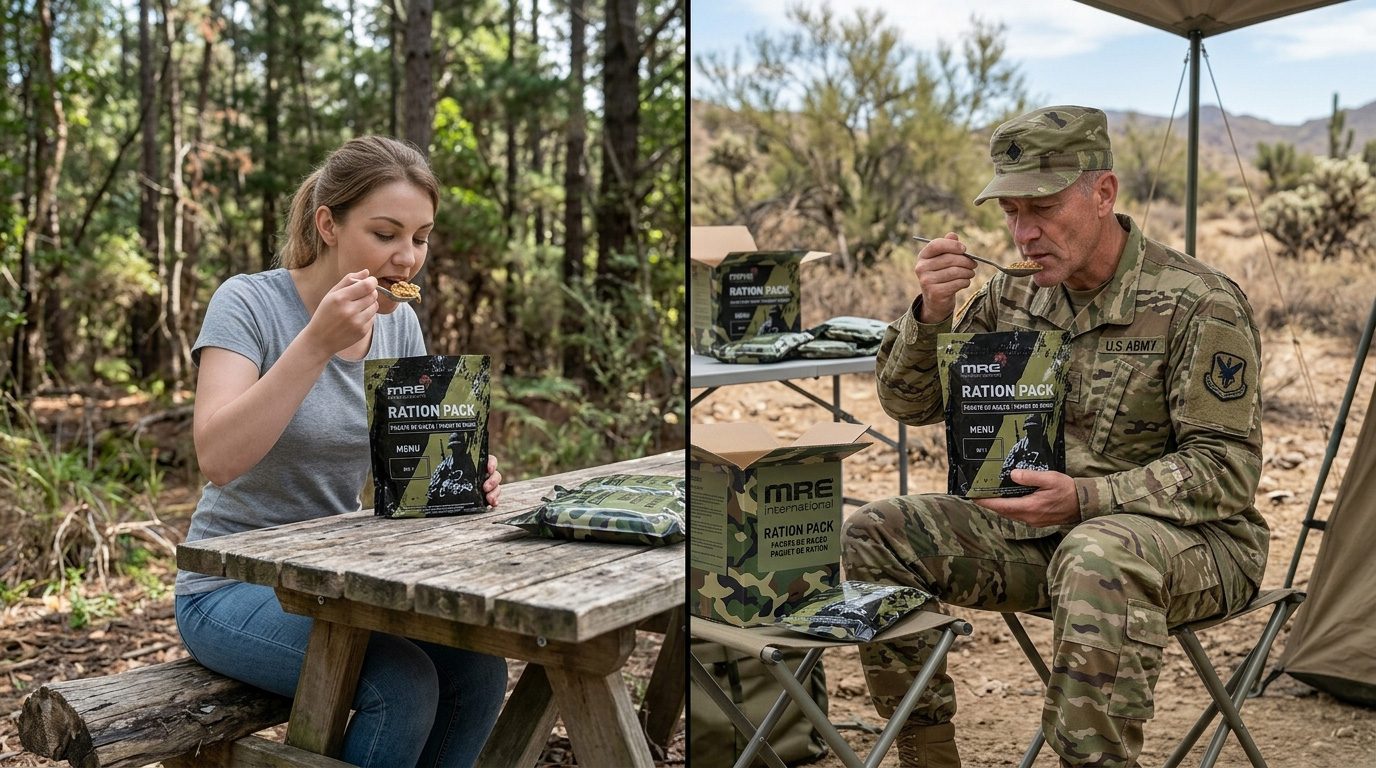
Because of these benefits, military MRE packs are often used beyond defense settings, including disaster response, humanitarian aid and outdoor survival scenarios.

Discover why military MREs are considered the gold standard for field nutrition.

MRE Nutrition in Emergency Food Supply Planning

A reliable emergency food supply should prioritize both longevity and nutritional value. MREs are particularly suited to this role because they are designed to remain stable for extended periods without refrigeration.

Unlike many preserved foods, MREs provide complete meals rather than individual ingredients. This makes them practical in situations where access to cooking facilities is limited or unavailable.

When planning an emergency supply, consider:

  • The total calorie needs per person per day
  • The variety of meals to avoid fatigue and maintain morale
  • Storage conditions to maximise shelf life
  • Ease of preparation in different environments

By incorporating MRE ration packs into your emergency planning, you ensure access to balanced meals that support both physical and mental resilience.

Explore the full article on The Critical Role of MRE Emergency Food Supply.

The Role of Variety and Dietary Options in MRE Meals

Modern MREs are no longer limited to a narrow range of flavors or dietary profiles. Manufacturers now offer a variety of MRE options to cater to different needs.

These include:

  • Beef, chicken and vegetarian meals
  • Halal-certified options for cultural requirements
  • Meals designed for higher or lower calorie intake
  • Specialized packs for extreme environments

This variety ensures that individuals can maintain consistent nutrition without compromising on personal or dietary preferences. It also supports long-term use, particularly in extended operations or emergency scenarios.

How MRE Nutrition Continues to Evolve

Advancements in food technology continue to improve the quality and effectiveness of MRE nutrition. Today’s ration packs are lighter, more flavorful, and more nutritionally refined than earlier versions.

Innovations include:

  • Improved packaging for longer shelf life
  • Enhanced flavor profiles for better acceptance
  • More precise nutrient balance for performance optimisation
  • Integration with modern dietary standards

The Value of Balanced MRE Nutrition

MRE nutrition is built on a simple but essential principle: delivering reliable, balanced energy in any environment. By combining carefully measured macronutrients, essential vitamins, and practical design, MRE meals provide a dependable solution for both everyday preparedness and extreme conditions.

Whether used as part of a military MRE, a personal emergency food supply, or outdoor provisioning, these meals are designed to support performance, endurance and resilience.

Understanding what goes into a balanced MRE highlights why these ration packs remain a trusted choice for those who need consistent nutrition when it matters most.

Explore the full range of MRE nutrition solutions or get in touch with the team to find the right food ration packs for your operational needs.

FAQS

MRE nutrition includes a balanced mix of carbohydrates, protein and fats, along with essential vitamins and minerals. Each MRE meal is designed to provide sustained energy and support physical performance in demanding conditions.

The average MRE calorie content ranges from 1,000 to 1,300 calories per meal. This high energy value helps meet daily requirements in situations where food access is limited.

Yes, MRE meals are carefully formulated to deliver balanced nutrition. They include a mix of macronutrients and micronutrients to support energy, muscle function and overall health.

A military MRE is designed to provide soldiers with a complete, ready-to-eat meal that supports endurance, strength and recovery in field conditions where traditional food preparation is not possible.

Latest Articles

Military Ration Packs vs Civilian MREs: What’s the Difference?

Military Ration Packs vs Civilian MREs: What’s the Difference?

Key Takeaways: Military ration packs prioritise field performance, while civilian MREs suit broader uses. Intended use matters more than whether an MRE is labelled military or civilian. Operational nutrition depends…

Creating a 72-Hour Emergency Food Response Plan

Creating a 72-Hour Emergency Food Response Plan

Key Takeaways: Early food planning keeps people supported when normal supply chains fail. Accurate headcounts prevent emergency food shortages during critical disruptions. Food and water calculations ensure enough supplies are…

Planning a Ration Pack Menu for Special Dietary Requirements

Planning a Ration Pack Menu for Special Dietary Requirements

Key Takeaways: Dietary needs identified early make ration packs safer and more suitable for recipients. A manageable range of ration menus can meet diverse needs without overcomplicating logistics. Clear labelling…