Emergency Food Supply

MRE Meals Explained: What They Are and Why People Use Them

Key Takeaways:

  • MRE meals provide reliable, ready-to-eat nutrition when cooking, refrigeration, or food access is unavailable.
  • Originally military rations, MREs are now widely used for emergencies, travel, and remote work environments.
  • Each MRE contains a complete, balanced meal designed to sustain energy in demanding conditions.
  • Long shelf life and durability make MREs ideal for emergency food supply and preparedness planning.
  • Modern MRE options accommodate diverse dietary, cultural, and operational requirements.

A Complete Guide to MRE Meals and Their Uses

MRE meals are designed to be reliable, long-lasting, and easy to use in situations where traditional cooking is not possible. Originally created for military use, they have since become a popular emergency food supply for civilians, outdoor enthusiasts, and organisations that need dependable nutrition in challenging environments.

In this guide, we will explain the meaning of MRE, what these meals contain, and why they are used across military, emergency, and everyday scenarios. Along the way, you will see where MRE meals fit into modern preparedness and how a trusted MRE supplier like MRE International supports these needs.

What Is an MRE? Understanding the Meaning

The term MRE stands for Meal, Ready to Eat. The MRE meaning is simple but powerful. It refers to a complete, pre-cooked meal that can be eaten straight from the package, either hot or cold, without the need for kitchens, refrigeration, or specialist equipment.

MRE meals were originally developed for military use to ensure soldiers could remain fuelled during operations in remote or hostile environments. Over time, their practicality and long shelf life made them useful well beyond the military.

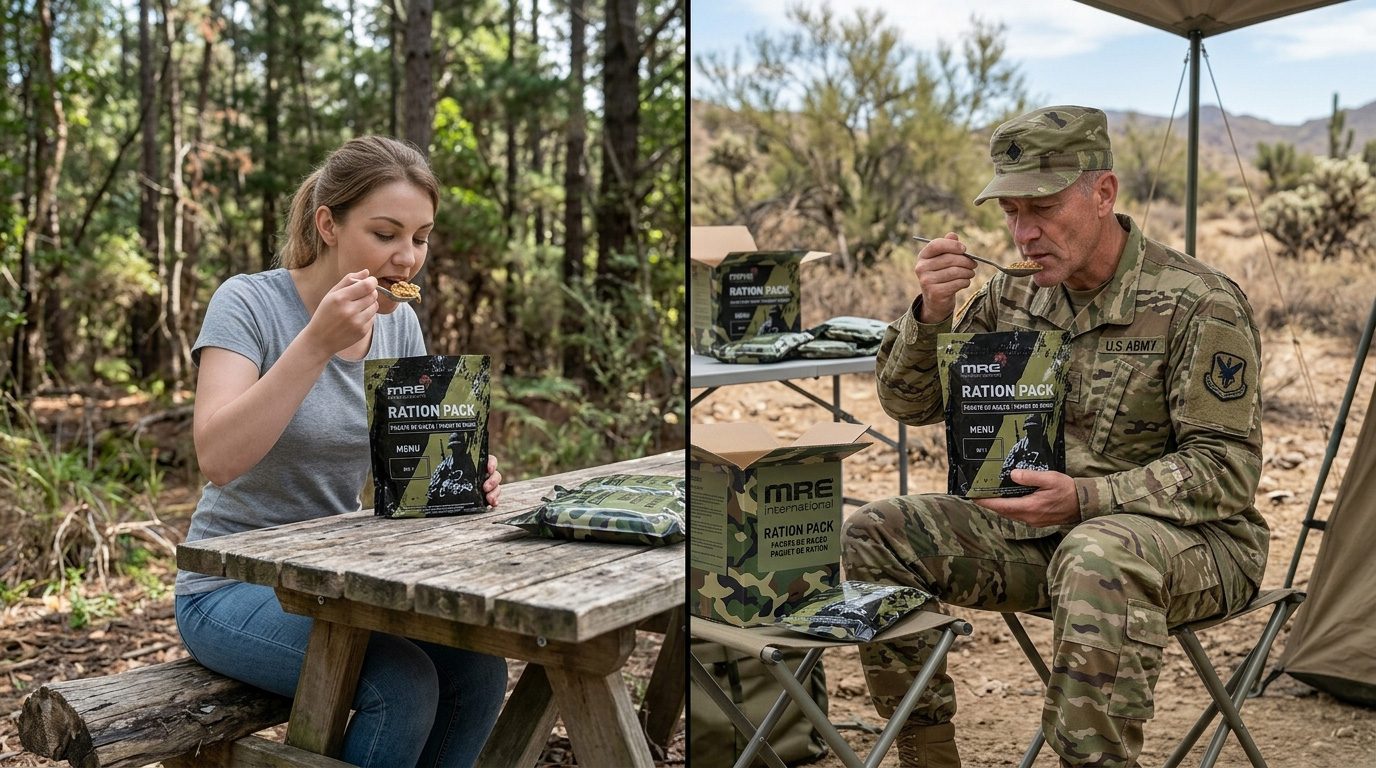
Today, MREs are commonly used for:

  • Emergency food supply planning
  • Disaster relief and humanitarian aid
  • Outdoor activities such as hiking and camping
  • Long-distance travel and expeditions
  • Industrial and offshore work

What Is Inside an MRE Meal?

One of the most common questions people ask is what exactly comes inside an MRE. While contents can vary by menu and dietary requirement, most MRE meals are designed to deliver balanced nutrition and sufficient calories for sustained activity.

Typical MRE Meal Components

  • Main entrée such as rice, curry, or stew
  • Side dish like vegetables, crackers, or grains
  • Snack item including energy bars
  • Dessert such as a biscuit or sweet item
  • Drink mix often isotonic or electrolyte-based.
  • Accessories including cutlery, seasoning, and a flameless ration heater

Many modern suppliers now offer specialised options, including vegan MRE menus that meet plant-based dietary requirements while still delivering adequate energy and nutrients.

This variety allows MRE meals to suit different cultural, dietary, and operational needs, which is especially important for organisations sourcing from a professional MRE supplier.

Why Were MRE Meals Created for Military Use?

Armed forces needed food that could survive extreme temperatures, rough handling, and long storage periods while still providing enough energy to support physical and mental performance.

For military operations, MREs offer several key advantages:

  • No need for cooking equipment or fresh ingredients
  • Long shelf life, often several years
  • Easy distribution and transport
  • Reliable calorie intake in unpredictable conditions

Even today, military use continues to shape how MRE meals are developed, with constant improvements in taste, nutrition, and packaging technology.

Beyond the Military: Modern Uses for MRE Meals

While MRE meals remain closely associated with military use, their role has expanded significantly. Many people now rely on them as part of a broader emergency food supply strategy.

Common Civilian and Commercial Uses

  • Emergency preparedness for natural disasters or power outages
  • Travel and expeditions where food access is limited
  • Outdoor recreation, including camping and trekking
  • Remote work environments such as mining or offshore projects

In emergency situations, having a ready supply of MRE meals can make a meaningful difference. They remove uncertainty around food safety, storage, and preparation when conditions are difficult.

Are There Different Types of MRE Meals?

Yes, and this is one reason why MRE meals are now used so widely. A reputable MRE supplier will offer multiple menu options to suit different needs.

Examples of Available MRE Options

  • Standard MREs with meat-based entrées
  • Vegan MRE options suitable for plant-based diets
  • Halal or culturally specific menus
  • High-calorie MREs for physically demanding tasks

This flexibility ensures that MRE meals are inclusive and adaptable, whether they are being used by aid organisations, travellers, or emergency planners.

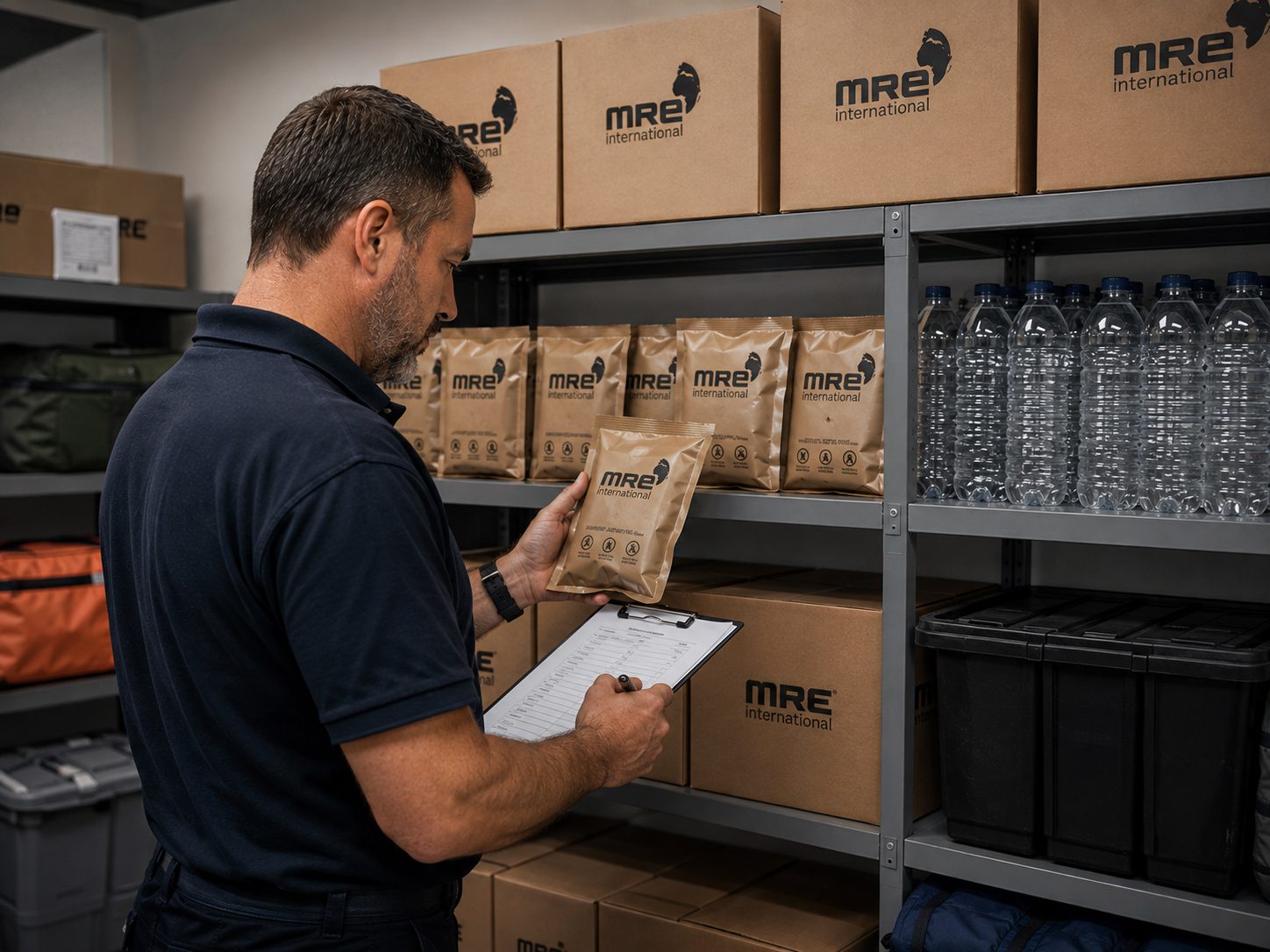
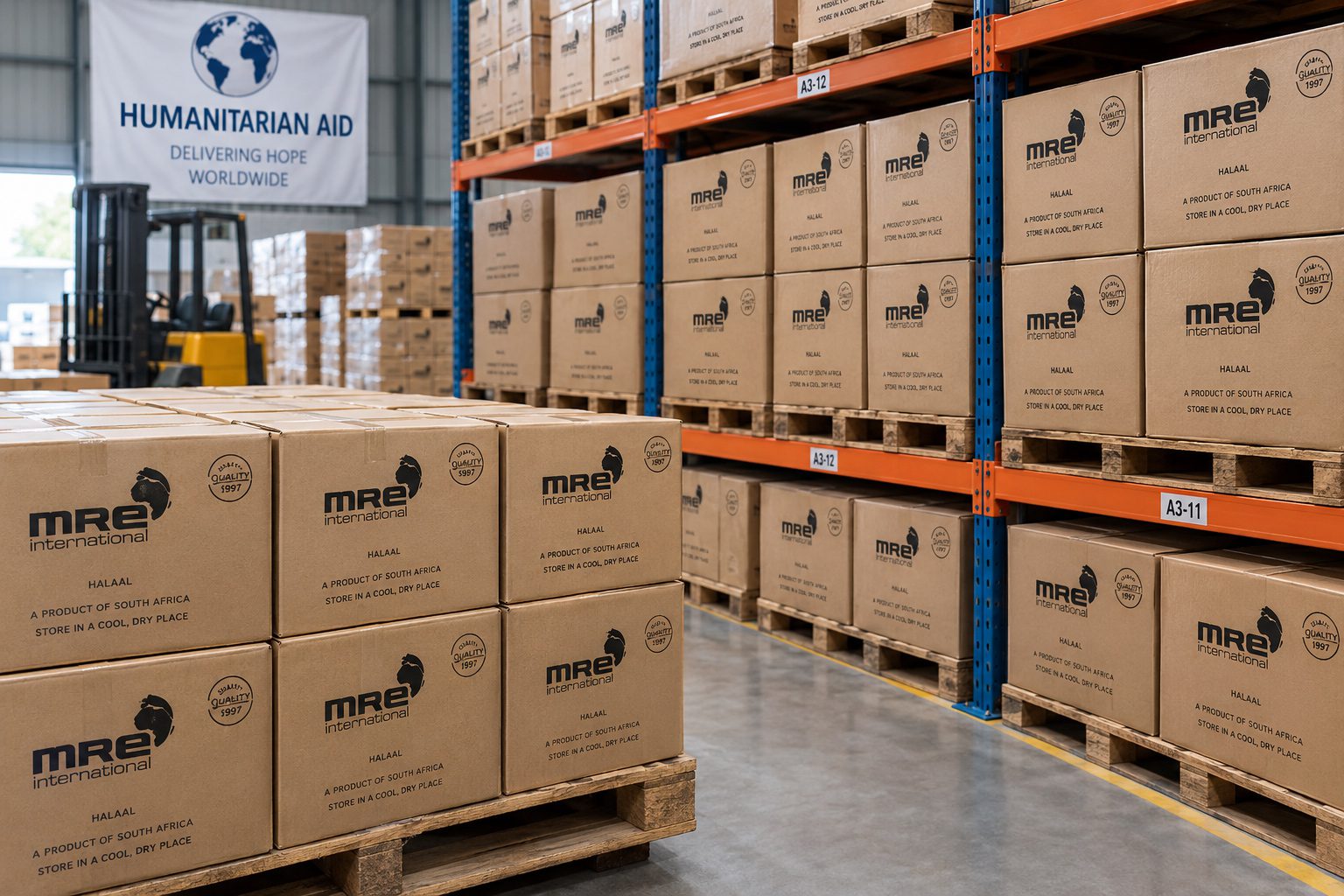
Image of MRE International's MRE meal kits ready to ship. Emergency Meal Kits.

Why Choose a Trusted MRE Supplier?

Not all MREs are created equal. Quality, nutritional balance, shelf life, and safety standards all depend on the experience and credibility of the MRE supplier.

A trusted supplier ensures:

  • Compliance with food safety and quality standards
  • Accurate nutritional information
  • Reliable shelf life and packaging
  • Consistent availability for large or repeat orders

When selecting MRE meals for military use, emergency food supply planning, or commercial operations, working with an established supplier reduces risk and improves reliability. 

Why MRE Meals Remain a Trusted Choice for Preparedness

MRE meals have evolved far beyond their original military purpose. Today, they represent a versatile and dependable food solution for anyone who needs nutrition without complexity. Understanding the MRE meaning, what is inside each meal, and how they are used helps individuals and organisations make informed decisions.

Whether you are planning for emergencies, travelling to remote locations, or sourcing food for large-scale operations, MRE meals offer convenience, durability, and peace of mind. With the right MRE supplier, they become a practical investment in preparedness and resilience.

Discover dependable MRE meals built for real-world conditions. Visit MRE International to find the right emergency food supply today.

FAQS

Most MRE meals have a shelf life of several years when stored correctly in cool, dry conditions. Exact longevity depends on temperature and packaging standards.

MRE meals are designed to deliver sufficient calories and nutrients to support physical activity, especially in demanding or remote environments.

Yes. MRE meals are fully cooked and safe to eat cold, although many include a flameless heater to warm the food if desired.

A reliable MRE supplier should meet food safety standards, provide clear nutritional information, offer consistent quality, and support bulk or repeat orders.

Latest Articles

Military Ration Packs vs Civilian MREs: What’s the Difference?

Military Ration Packs vs Civilian MREs: What’s the Difference?

Key Takeaways: Military ration packs prioritise field performance, while civilian MREs suit broader uses. Intended use matters more than whether an MRE is labelled military or civilian. Operational nutrition depends…

Creating a 72-Hour Emergency Food Response Plan

Creating a 72-Hour Emergency Food Response Plan

Key Takeaways: Early food planning keeps people supported when normal supply chains fail. Accurate headcounts prevent emergency food shortages during critical disruptions. Food and water calculations ensure enough supplies are…

Planning a Ration Pack Menu for Special Dietary Requirements

Planning a Ration Pack Menu for Special Dietary Requirements

Key Takeaways: Dietary needs identified early make ration packs safer and more suitable for recipients. A manageable range of ration menus can meet diverse needs without overcomplicating logistics. Clear labelling…