Step 1: Identify the People Your Emergency Food Supply Must Support
Start by determining exactly who may rely on your supplies.
This could include:
- Permanent employees
- Contractors
- Security personnel
- Emergency-response teams
- Visitors
- Drivers
- People temporarily sheltering on-site
- Individuals with additional nutritional or medical needs
Avoid planning only around the normal number of employees. Ask how many people could realistically be on the premises or deployed during an emergency.
| For example, a remote operation with 150 employees and 30 contractors may need to plan for 180 people rather than its official permanent headcount. |
Step 2: Calculate Your 72-Hour Food Requirements
Once you know the population, calculate how many meals or daily ration packs are required.
For a straightforward three-meal system:
Number of people × 3 meals × 3 days = total meals required
A site supporting 100 people would therefore need provision for approximately 900 meal occasions over 72 hours.
Calculations should also allow for additional personnel, unexpected delays and a reasonable contingency allowance.
Water should be planned alongside food rather than treated separately. Loss of safe water infrastructure can occur during floods, storms and other emergencies.
Step 3: Choose Suitable Emergency Food
Emergency supplies should be simple to store, distribute and consume when infrastructure is limited.
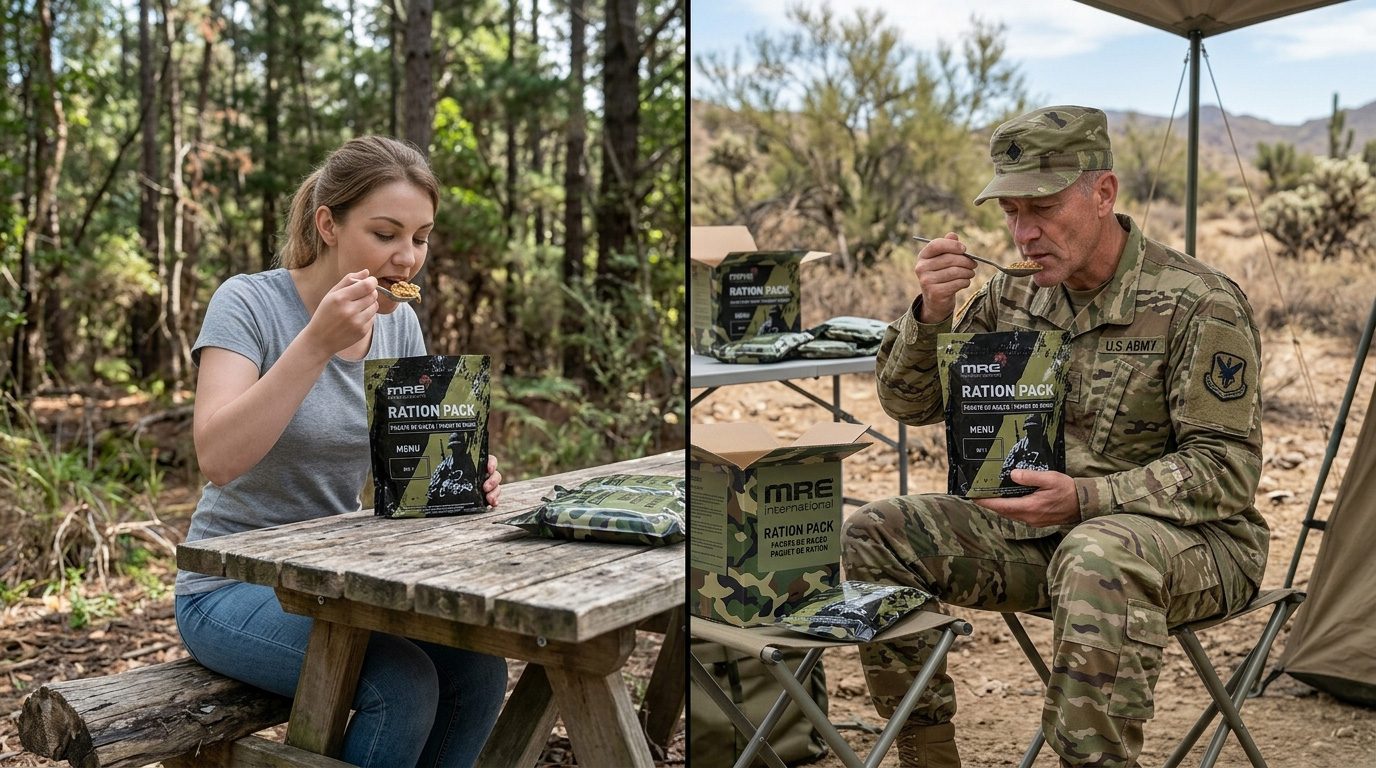
MRE RationsMRE rations are particularly useful because they provide self-contained meals or daily food solutions that require little or no conventional preparation. Depending on the configuration, MRE packs may contain main meals, snacks, beverages, hydration products and utility items. MRE International offers several formats, including 24-hour rations, humanitarian packs, single meals and First Responder emergency packs. [Explore Ration Pack Menus] |
Emergency Ration PacksComplete emergency ration packs can simplify planning because multiple components are packed together rather than sourced separately. They can be particularly useful when meals need to be issued quickly to teams, vehicles or individual personnel. [Explore Emergency Pack Menus] |
Emergency Food Bars and Supplementary FoodsCompact energy foods can supplement complete meals when personnel are active for long periods or cannot stop for a full meal. Bars, biscuits, porridges, snacks and beverage products can also add variety across a three-day response period. These products are generally best used to supplement complete emergency food provision rather than replace a full ration where sustained feeding is required. [Explore MRE Snacks] |
Step 4: Plan Storage and Inventory Management
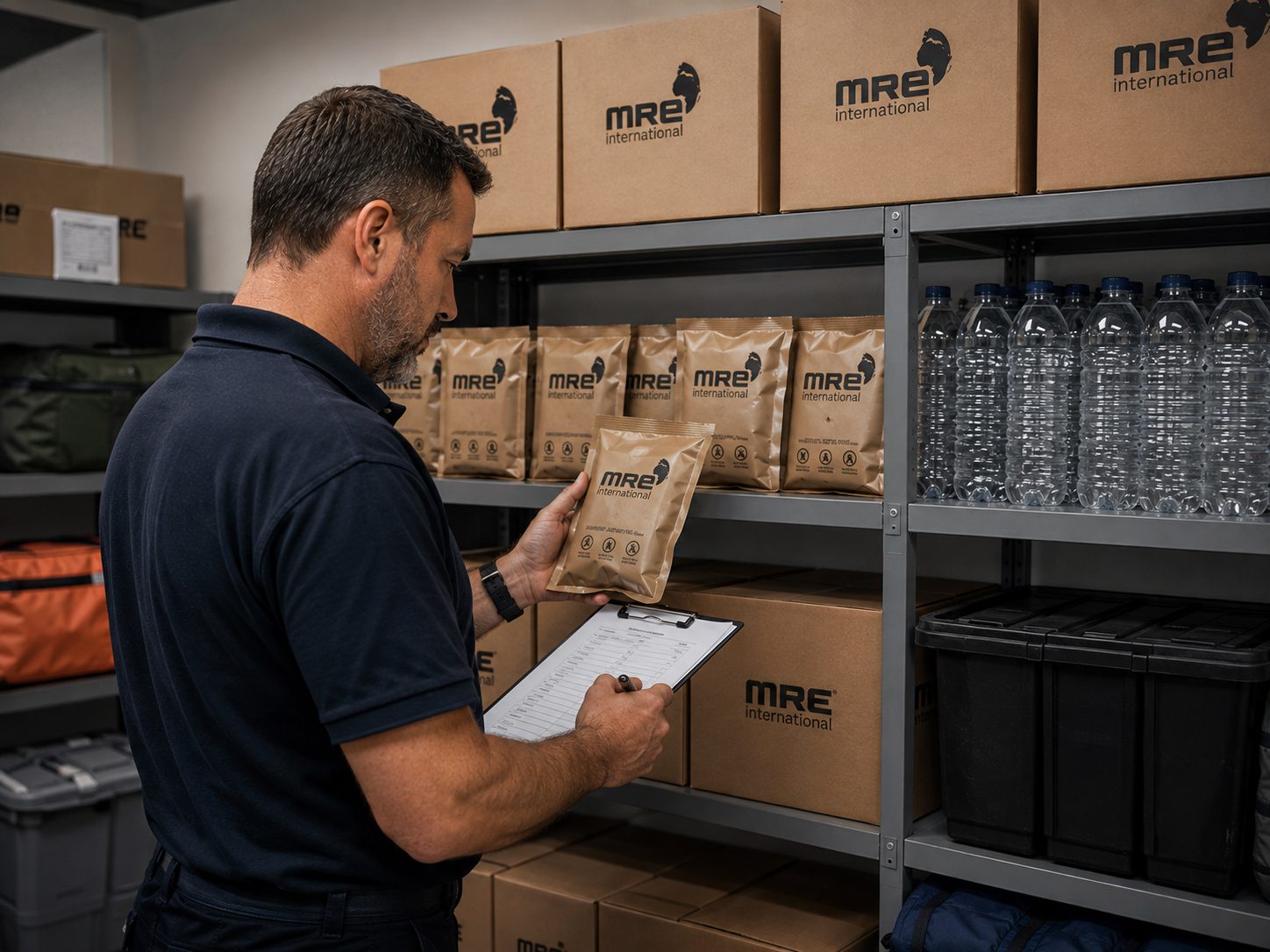
Buying an emergency food supply is only the beginning. Supplies must remain safe and accessible until required.
Create an inventory that records:
- Product
- Quantity
- Batch details
- Expiry or best-before dates
- Storage requirements
- Storage location
- Inspection date
- Replacement or rotation date
Store products according to the manufacturer’s instructions and protect them from moisture, contamination, physical damage and extreme heat or cold. Temperature extremes can affect food quality, packaging and shelf life, so storage conditions should be considered when planning emergency stockpiles.
Read more on MRE Meals Built for Extreme Conditions
Step 5: Develop an Emergency Food Distribution Procedure
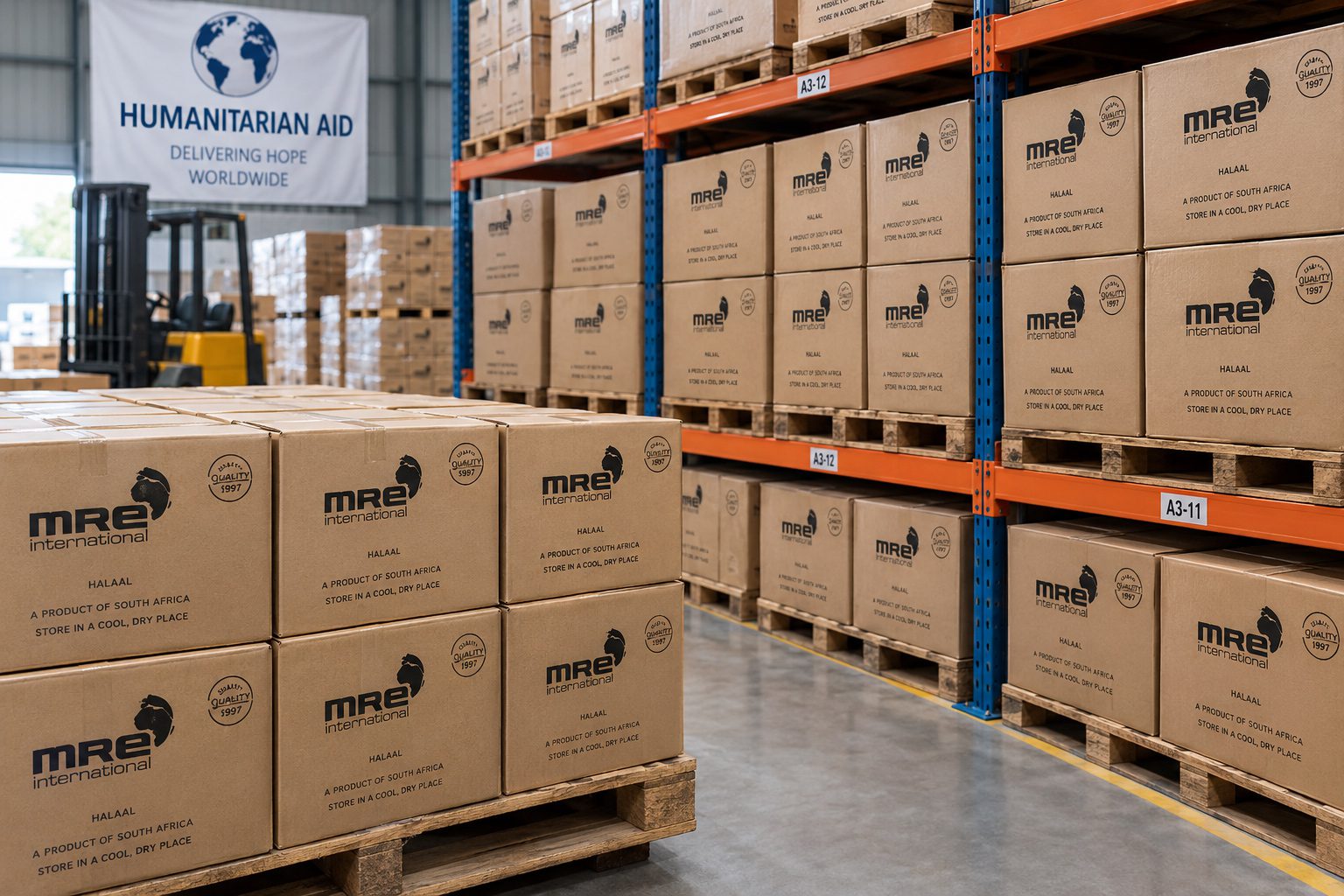
A warehouse full of food is not an effective emergency plan if nobody knows how to distribute it.
Decide in advance:
- Who can access emergency stock
- Who authorises distribution
- Where collection points will be located
- How quantities issued will be recorded
- How supplies will reach isolated teams
- What happens if the primary storeroom becomes inaccessible
For larger operations, consider distributing stock across more than one secure location to reduce dependence on a single access point.
Step 6: Include Special Dietary Requirements
Emergency conditions do not remove people’s dietary needs.
Your plan may need to accommodate:
- Halal requirements
- Vegetarian meals
- Vegan meals
- Food allergies
- Medical dietary requirements
- Cultural preferences
Identify these requirements before an emergency and clearly label different food ration packs so the correct meals can be distributed efficiently.
MRE International can also develop custom ration packs around specific dietary, nutritional and operational requirements.
Step 7: Test and Review Your Emergency Food Plan
An emergency response plan should be tested rather than simply filed away.
Conduct periodic exercises to confirm:
- Stock can be accessed quickly
- Staff know their responsibilities
- Distribution points are practical
- Inventory records are accurate
- Dietary packs are clearly identified
- Suppliers and emergency contacts remain current
Review the plan whenever staffing levels, locations or operational risks change.
Common Emergency Food Planning Mistakes
Some of the biggest weaknesses in emergency preparedness plans are avoidable.
Underestimating Food RequirementsFailing to account for everyone who may need support can leave emergency food supplies insufficient. | Forgetting Safe Water SuppliesEmergency planning should include safe drinking water and water required for food preparation. | Ignoring Special Dietary RequirementsAllergies, medical needs, religious requirements and dietary preferences should be considered in advance. |
Poor Storage ConditionsExposure to moisture, contamination, extreme heat or cold can affect food quality and shelf life. | Failing to Rotate StockEmergency food should be regularly inspected and replaced before reaching its expiry or best-before date. | Waiting Until an EmergencyEstablishing supply arrangements beforehand makes it easier to replenish, scale or customise emergency stock when circumstances change. |
Why MRE Packs Work Well for a 72-Hour Response
MRE packs are well suited to emergency response because they can minimise dependence on normal catering infrastructure.
They provide:
- Compact storage
- Easy transportation
- Minimal preparation
- Individually distributable meals
- Long-life food options
- Flexible pack formats
- Menu and dietary variety
MRE International’s ration pack menu includes full 24-hour packs alongside humanitarian, single-meal and First Responder configurations, allowing organisations to match supplies to different deployment scenarios.
[Explore MRE Ration Pack Menu]
Build Your Emergency Food Supply Before You Need It
A well-designed 72-hour plan identifies the people who need support, calculates realistic requirements, provides suitable food and water, accommodates dietary needs and establishes a clear method for storing and distributing supplies.
Choosing reliable emergency food is an important part of that preparation.
Preparing your organisation’s emergency food response? Contact MRE International to discuss ration pack quantities, custom configurations and bulk supply requirements.