Emergency Food Supply

Military Ration Packs vs Civilian MREs: What’s the Difference?

Key Takeaways:

  • Military ration packs prioritise field performance, while civilian MREs suit broader uses.
  • Intended use matters more than whether an MRE is labelled military or civilian.
  • Operational nutrition depends on energy balance, workload, climate and deployment length.
  • Effective ration packs must be portable, durable and practical to prepare in the field.
  • Military and civilian MREs can support halal, vegan, vegetarian and gluten-free diets.
  • Choose food ration packs by nutrition, environment and logistics, not the label alone.

How Do Military Ration Packs Differ From Civilian MREs? 

Military ration packs and civilian MREs may look similar at first glance. Both provide shelf-stable food that can be stored, transported and eaten where conventional catering is unavailable. But they are not necessarily designed for the same user, environment or operational demands.

Military rations prioritise field performance, portability, nutrition and logistical efficiency. Civilian MREs, meanwhile, may be designed for emergency preparedness, outdoor activities, remote work or general long-term food storage.

Understanding these differences matters when choosing food ration packs for a defence contract, remote workforce, emergency stockpile or individual preparedness kit.

Here is what separates the two and how to determine which option best fits your requirements.

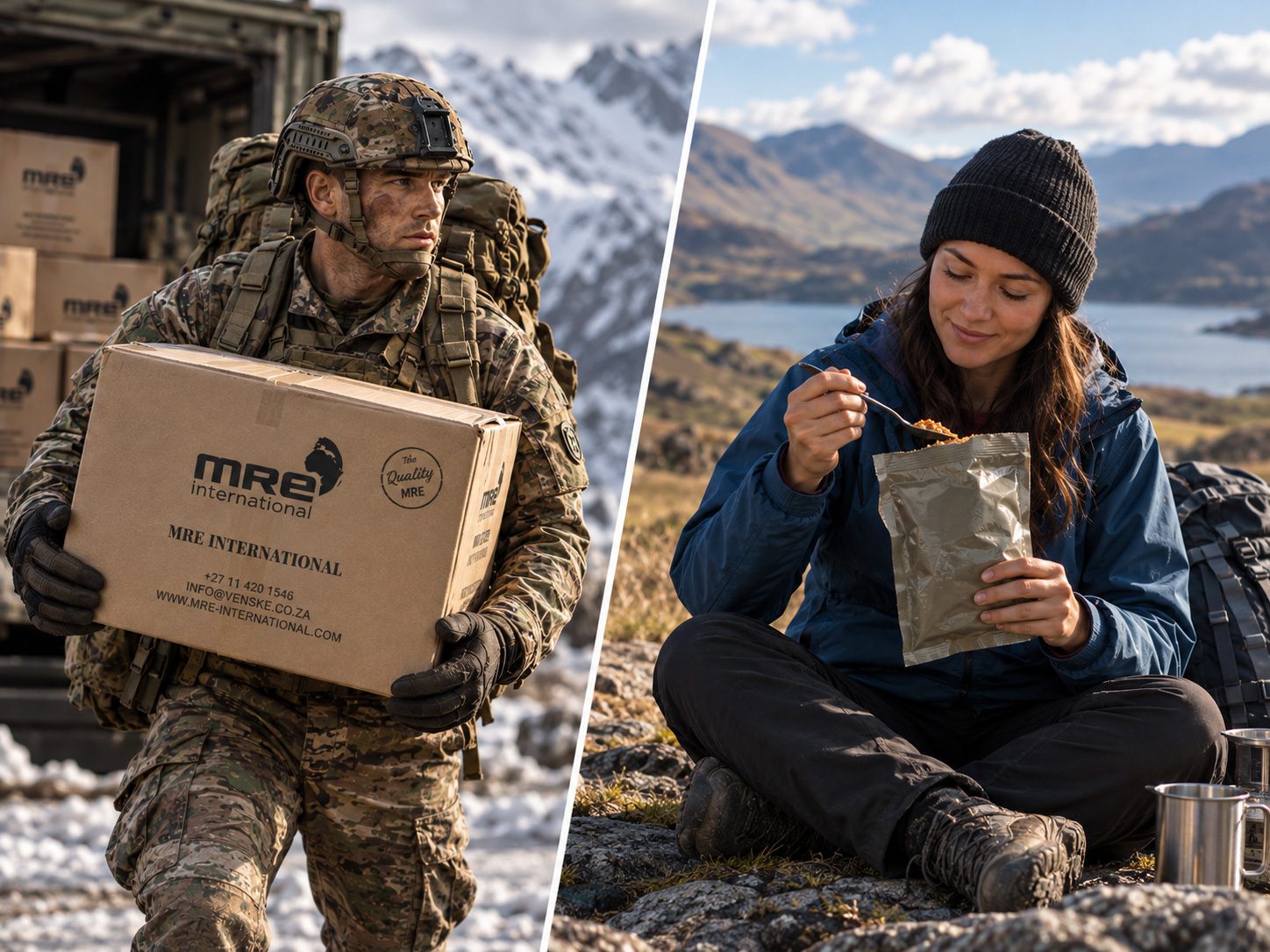
Soldier carrying MRE supplies beside a hiker eating a field ration outdoors.

What Are Military Ration Packs?

Military ration packs are designed to provide practical nutrition when personnel are operating away from normal kitchens, refrigeration and food supply infrastructure.

Modern packs can combine ready-to-eat MRE meals with snacks, drinks, hydration products, condiments and other field-use components. A full-day pack may contain several eating occasions rather than a single meal.

MRE International’s 24-hour ration format, for example, includes two main meals alongside a soup, dried snacks, sauces, water purification components, instant beverages, and energy and electrolyte boosters.

Military rations have also changed significantly over time. For a deeper look at how canned field meals developed into lightweight modern MREs, read The Evolution of Military Rations: From Canned Meals to MREs. 

Explore Ration Pack Menus

What Are Civilian MREs?

Civilian MREs use many of the same principles as military-style meals: portability, extended shelf life and minimal preparation.

The main difference is usually the intended application.

Civilian products may be purchased for:

  • Emergency and disaster preparedness
  • Camping, hiking and outdoor activities
  • Remote work
  • Vehicle or household emergency kits
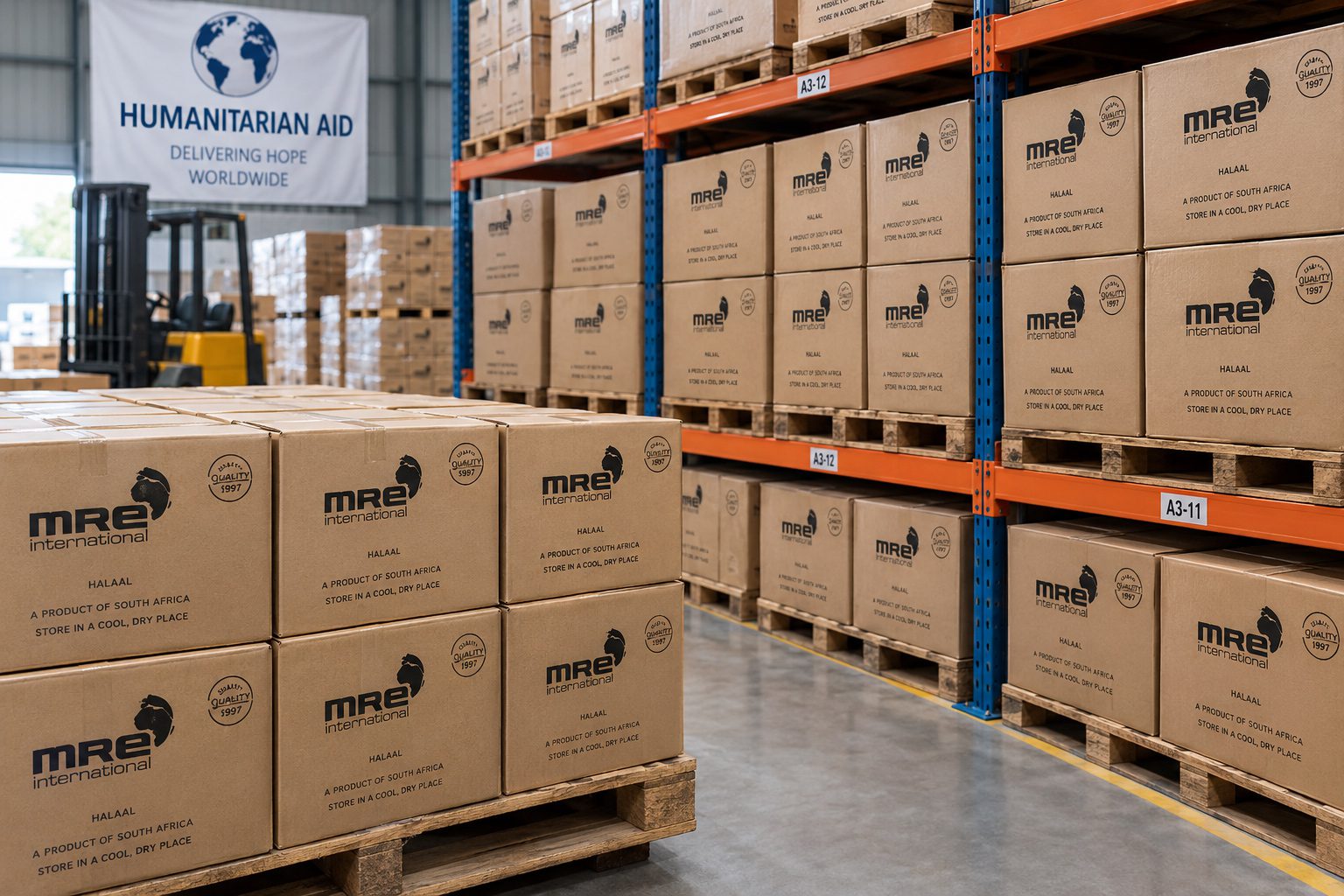
  • Humanitarian support
  • Business continuity planning

They may be sold as individual MRE meals, single-meal kits or more comprehensive ration packs.

This means “civilian” does not automatically mean lower quality. The important question is whether the product’s nutritional content, packaging, shelf life and configuration match how it will actually be used.

Military Ration Packs vs Civilian MREs: Key Differences

For procurement teams, the most useful MRE comparison starts with intended use rather than the label on the pack.

FactorMilitary ration packsCivilian MREs
Primary purposeField and operational deploymentPreparedness, outdoor or general use
ConfigurationOften single-meal or full-day systemsIndividual meals or multi-item kits
NutritionSelected around operational demandsVaries according to intended use
PackagingDesigned for transport and field handlingVaries significantly by supplier
PreparationMinimal infrastructure requiredUsually minimal preparation
Dietary optionsCan include specialist requirementsVegetarian, halal and vegan options may be available
Buying formatOften suited to operational or bulk procurementIndividual and bulk options may be available

Nutrition Is a Major Part of the MRE Comparison

One of the biggest mistakes when comparing military ration packs with civilian products is looking only at total calories.

Operational nutrition needs to account for how energy is delivered throughout the day, particularly when people are performing demanding physical tasks.

Carbohydrates can provide readily available energy, while protein and fats contribute to a more balanced ration. Snacks, drinks and electrolyte products can also help distribute intake across a deployment rather than relying on one large meal.

The ideal composition depends on workload, climate and deployment duration.

Explore the blog on MRE Nutrition: What Goes Into a MRE Meal.

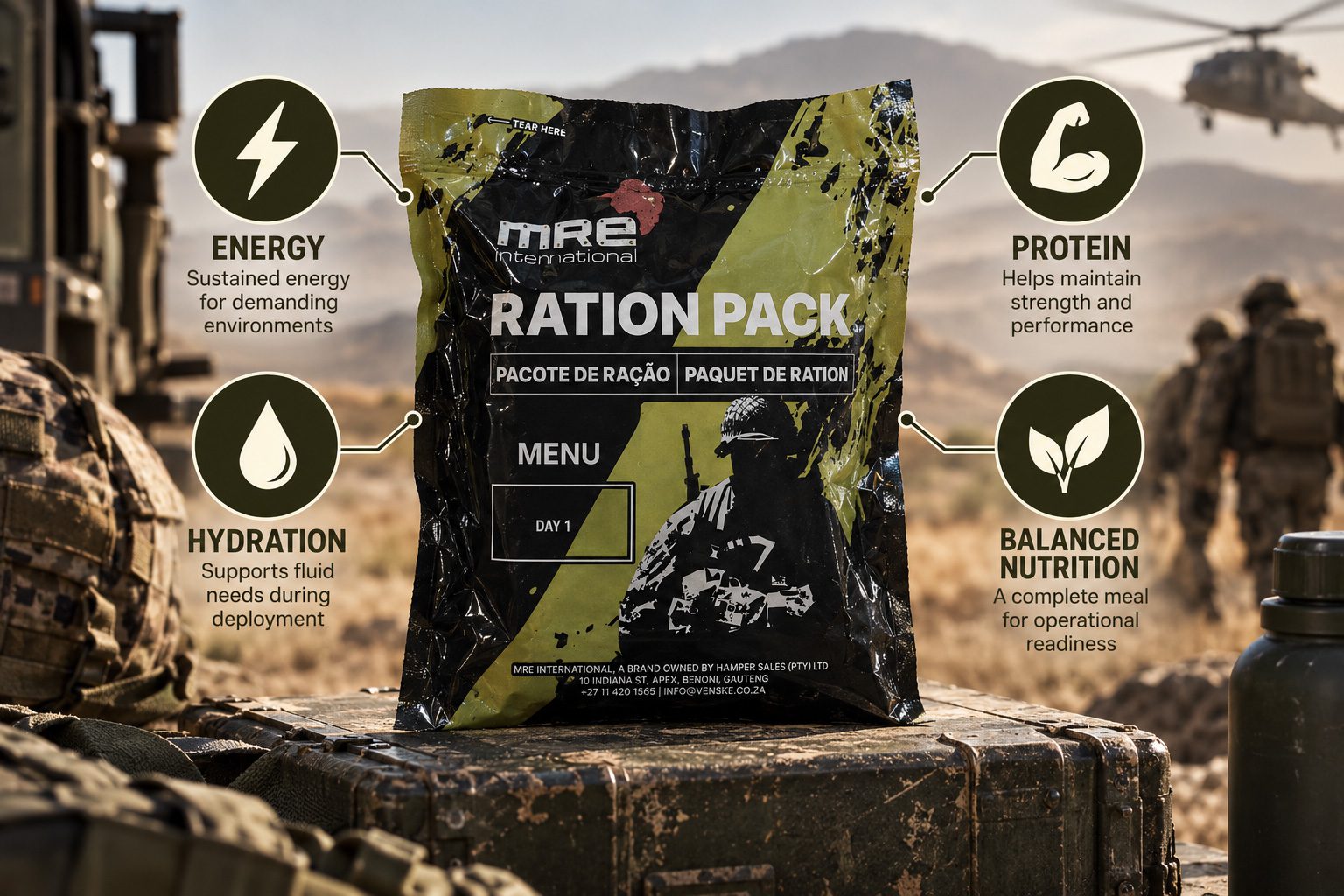
MRE ration pack with energy, protein, hydration and balanced nutrition icons.

Packaging and Portability Matter in the Field

A meal can be nutritious but still perform poorly as a ration if it is difficult to transport, distribute or prepare.

Military environments can involve limited storage space, long transport routes and unpredictable access to cooking equipment. Military ration packs therefore need to work as logistical systems as much as food products.

MRE International’s Essential Range demonstrates this approach through compact packs combining foods such as corned meat, pilchards and baked beans with porridge, biscuits, isotonic drinks and other components. The range is designed for applications including military operations, emergency preparedness and remote workforce support

Read more on Food Ration Packs vs Field Catering.

Do Military and Civilian MREs Have Different Dietary Options?

Both can accommodate dietary requirements, depending on the supplier and pack configuration.

Modern procurement may need to consider halal, vegetarian, gluten-free or vegan MRE options alongside standard menus.

MRE International, for example, offers shelf-stable vegan meals and ration packs that are Halal certified, with configurations that can also accommodate vegetarian and gluten-free requirements.

Explore the blog on Food Ration Packs for Vegan, Halal and Gluten-Free Diets.

Which Type of MRE Should You Choose?

The best choice depends on the intended environment.

Choose Military Ration Packs When:

You are provisioning personnel for field operations, security deployments, remote work or other environments where durability, portability and complete ration planning are priorities.

Consider Civilian MREs When:

You need convenient shelf-stable food for preparedness, camping, travel or situations where military-style full-day provisioning is unnecessary.

For organisations, the distinction becomes less important than the specification.

Ask:

How many people are being fed? For how long? Under what conditions? What nutritional, dietary, preparation and transport requirements must the ration meet?

Choose Ration Packs for the Mission, Not Just the Label

The most important difference between military ration packs and civilian MREs is not simply who can buy them. It is what the ration has been designed to achieve.

Nutrition, shelf life, pack contents, portability, preparation requirements and dietary needs should all be considered before selecting a solution.

Explore MRE International’s ration pack range or contact the team to discuss military, civilian and customised MRE solutions for your operational requirements.

FAQs

Military ration packs are configured around operational field requirements, while civilian MREs are commonly intended for preparedness, outdoor activities and other non-military situations. Actual contents and specifications vary by product.

Yes. Military-style MRE meals and ration packs are commercially available to civilians. MRE International sells individual meals and multiple ration pack formats through its online range.

They can be. Military ration packs may be configured around demanding operational requirements and multiple eating occasions. Civilian products vary considerably, so compare actual nutritional information rather than assuming all MREs provide equivalent nutrition.

Yes. Vegan MRE meals and ration packs are available. MRE International offers plant-based options designed for shelf-stable field use, including vegan packs that are also Halal certified.

Latest Articles

Military Ration Packs vs Civilian MREs: What’s the Difference?

Military Ration Packs vs Civilian MREs: What’s the Difference?

Key Takeaways: Military ration packs prioritise field performance, while civilian MREs suit broader uses. Intended use matters more than whether an MRE is labelled military or civilian. Operational nutrition depends…

Creating a 72-Hour Emergency Food Response Plan

Creating a 72-Hour Emergency Food Response Plan

Key Takeaways: Early food planning keeps people supported when normal supply chains fail. Accurate headcounts prevent emergency food shortages during critical disruptions. Food and water calculations ensure enough supplies are…

Planning a Ration Pack Menu for Special Dietary Requirements

Planning a Ration Pack Menu for Special Dietary Requirements

Key Takeaways: Dietary needs identified early make ration packs safer and more suitable for recipients. A manageable range of ration menus can meet diverse needs without overcomplicating logistics. Clear labelling…