How Nutritional Science in MREs Has Evolved
From Calories to Performance Nutrition
Historically, military feeding programs focused primarily on delivering enough calories to prevent hunger.
Over time,
military nutrition science shifted toward a more comprehensive approach that considers:
- Macronutrient balance
- Sustained energy release
- Muscle recovery
- Cognitive performance
- Hydration support
Micronutrient fortification has also become increasingly important, helping personnel maintain physical and mental performance during prolonged operations.
Read more on MRE Nutrition.
MRE Nutrition in Global Operational Contexts
Operational environments have a significant impact on nutritional requirements. Heat, humidity, and arid conditions can increase physical demands and influence hydration and energy needs.
Modern ration systems are often adapted to suit regional operating environments, operational requirements, and local food preferences to improve acceptance and consumption in the field.
Learn more about why menu design matters in our Best MRE Meals: Why Cultural Flavors Matter guide.
Specialised Ration Options Through the Years
Military ration systems have become increasingly specialised over time. Modern programmes may include cold-weather rations, high-protein options, and mission-specific formulations
designed to meet different operational demands.
Learn more about MRE Meals Built for Extreme Heat and Extreme Cold.
Who Uses MREs Today?
Military & Defence Operations
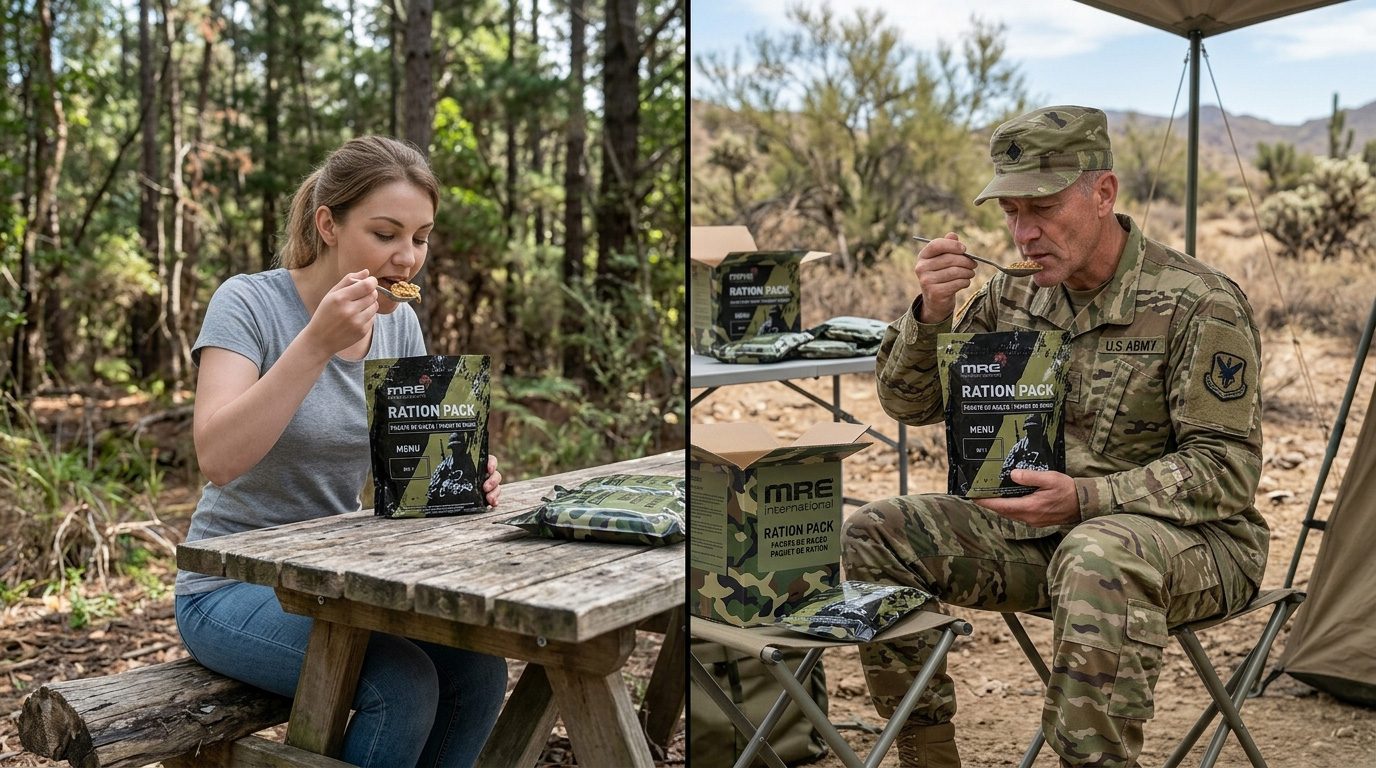
Military organisations remain the primary users of MREs and other military rations.
Designed for field conditions, MREs provide reliable nutrition without requiring cooking facilities or refrigeration. Their portability and long shelf life make them a core component of military feeding programmes worldwide.
Modern ration systems support:
- Frontline deployments
- Peacekeeping missions
- Border security operations
- Multinational defence exercises
|
Humanitarian Aid & Disaster Relief
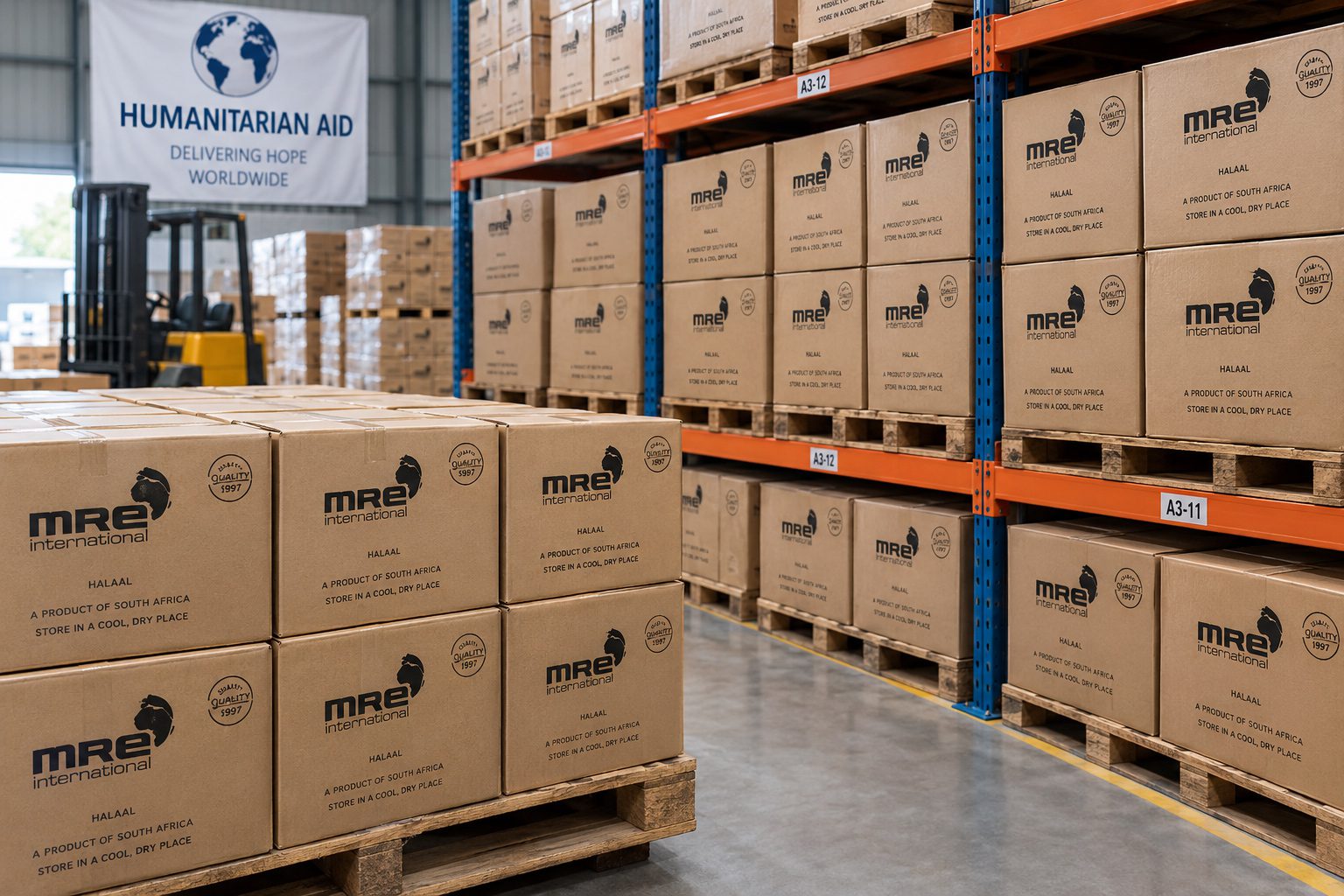
MREs have become essential tools in humanitarian response efforts.
When infrastructure is damaged or unavailable, ready-to-eat meals can be distributed quickly to affected populations. Their self-contained format makes them particularly effective during emergencies where speed and simplicity are critical.
Because they require no cooking infrastructure, they are frequently deployed during:
- Natural disasters
- Emergency evacuations
- Refugee support operations
- Crisis response initiatives
|
Workforce & Remote Site Feeding
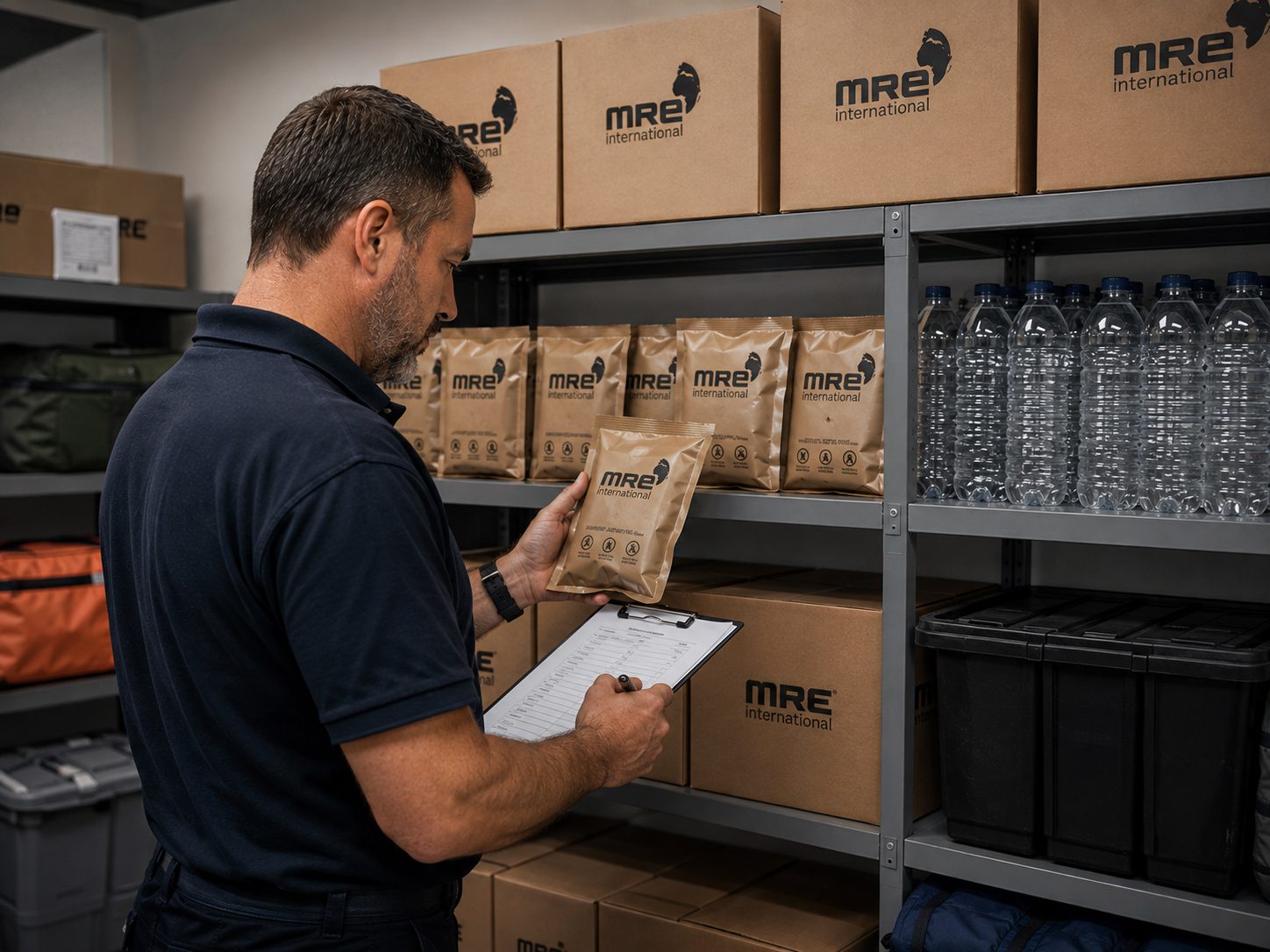
Industries operating in remote locations increasingly rely on ration-based feeding solutions.
Military-grade ration packs provide a practical feeding option for workforces operating far from established catering facilities. Bulk supply formats and long shelf life help simplify logistics across large projects.
Common sectors include:
- Mining
- Logistics
- Oil and gas
- Infrastructure development
Bulk and palletised military food packs provide efficient feeding solutions where traditional catering is impractical. |
Individual Preparedness & Outdoor Use
MREs are also widely used outside of professional settings.
Outdoor enthusiasts and preparedness-minded consumers value MREs for their convenience, portability, and long shelf life. Their ready-to-eat format makes them a practical option when access to traditional cooking or food supplies is limited.
MREs are also popular among the following:
- Hikers
- Overlanders
- Campers
- Emergency preparedness enthusiasts
The availability of single-unit and small-pack purchases makes modern ration systems accessible beyond military and commercial applications. |
The Future of Military Ration Technology
AI-Formulated Nutrition & Personalised Rations
Future ration systems may be customised to individual operational requirements.
Emerging technologies could enable:
- Mission-specific calorie targets
- Personalised macronutrient profiles
- Data-driven nutrition planning
- Enhanced performance optimisation
Sustainable Packaging & Bio-Materials
Sustainability is becoming an increasingly important consideration in military logistics.
Future developments are expected to focus on:
- Reduced packaging waste
- Biodegradable materials
- Improved recycling capabilities
- Lower environmental impact throughout the supply chain
Why Modern Military Rations Matter More Than Ever
The history of military rations reflects a continuous pursuit of better nutrition, greater mobility, and improved operational efficiency. From salted meats and hardtack to today’s advanced MRE systems,
ration technology has evolved dramatically to meet the demands of modern operations.
As military, humanitarian, and commercial organisations continue to operate in increasingly complex environments,
innovation in field feeding remains essential. Modern army ration packs, field rations, and military meals are no longer just about survival; they are designed to support performance, resilience, and mission success.
When choosing a supplier, it’s important to work with an experienced provider capable of delivering reliable, high-quality ration solutions.
Explore MRE International’s full range of military rations, MREs, and specialised food solutions from single-unit purchases to palletised bulk orders with worldwide distribution from South Africa.