Key Takeaways:
- Choose ration packs when infrastructure is limited or unreliable to reduce operational risk.
- Field catering only works well in stable, long-term sites with reliable access and logistics.
- MRE packs provide faster, scalable, and more predictable food supply in remote environments.
- Unstable supply chains in Africa make ration packs a more reliable default option.
- Infrastructure dependency is the biggest risk factor when choosing field catering.
Choosing Between a Food Ration Pack and Field Catering
Feeding a remote workforce is one of the most underestimated logistical challenges in field operations. It rarely appears on the risk register until something goes wrong: a cold chain failure in 40°C heat, a catering contractor who can’t reach site after a road closure, or a crew going without a hot meal for 18 hours during a rapid deployment.
If you’re procuring food supply for a remote operation in Africa, you’re essentially choosing between two very different systems: mobile field catering and food ration packs (MRE packs).
Both can work. The question is which one works for your environment, your timeline, and your operational risk profile.
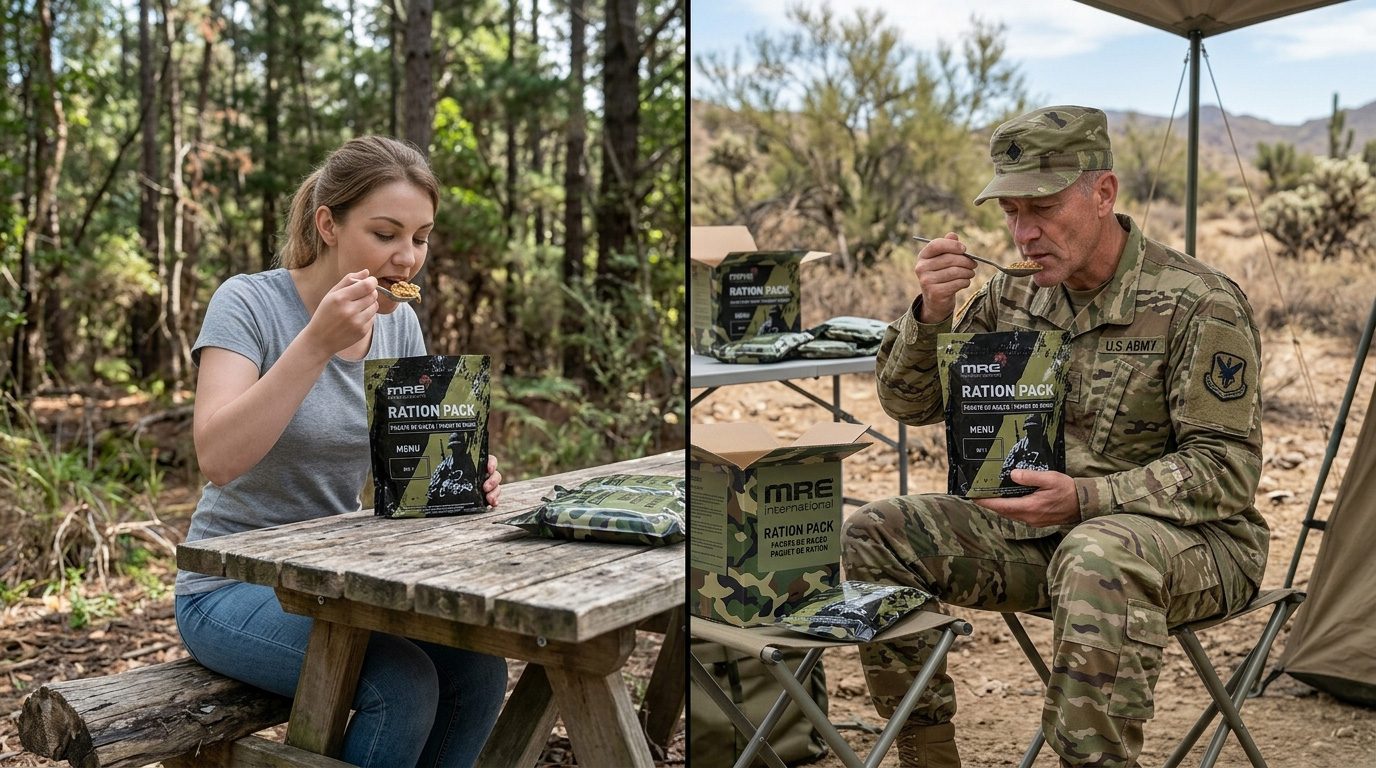
Visual: Split image of sealed food rations and on-site catering serving workers in rugged remote landscape
What Is Mobile Field Catering?
Mobile field catering means deploying a full food service operation to site: kitchen equipment, refrigeration units, trained catering staff, fuel for cooking and cold storage, and a reliable supply of perishable ingredients. For large, established camps with road access and stable infrastructure, it can deliver a strong workforce experience and menu variety that boosts morale.
The operational requirements, however, are substantial:
- Infrastructure: Cold chain, cooking facilities, water supply, waste management
- Staffing: Trained catering personnel who need to reach site, be housed, and be rotated
- Lead time: Days to weeks to mobilize from scratch; longer in remote regions
- Ongoing logistics: Regular fresh food resupply runs, which depend on road conditions and supplier availability
- Vulnerability: A single supply chain disruption, staff illness, or vehicle breakdown can halt meal service entirely
In the African context, where road conditions across sub-Saharan routes can shift dramatically with weather or security events, that vulnerability is not theoretical. It’s a recurring operational reality for mining, oil and gas, and NGO field teams alike.
What Are Food Ration Packs (MRE Packs)?
A food ration pack is a self-contained, shelf-stable meal system designed to deliver complete nutrition with zero infrastructure. No kitchen, no cold chain, no water supply required. Flameless ration heater technology means your team gets a hot meal whether they’re in a DRC mining camp, a remote security post in the Sahel, or a disaster relief staging area with no power.
MRE packs are nutritionally engineered for sustained physical performance, typically delivering 1,200 to 3,000 calories per pack depending on the format (single meal vs. 24-hour ration).
For procurement teams, the key advantages are:
- No infrastructure dependency: Deployable anywhere, immediately
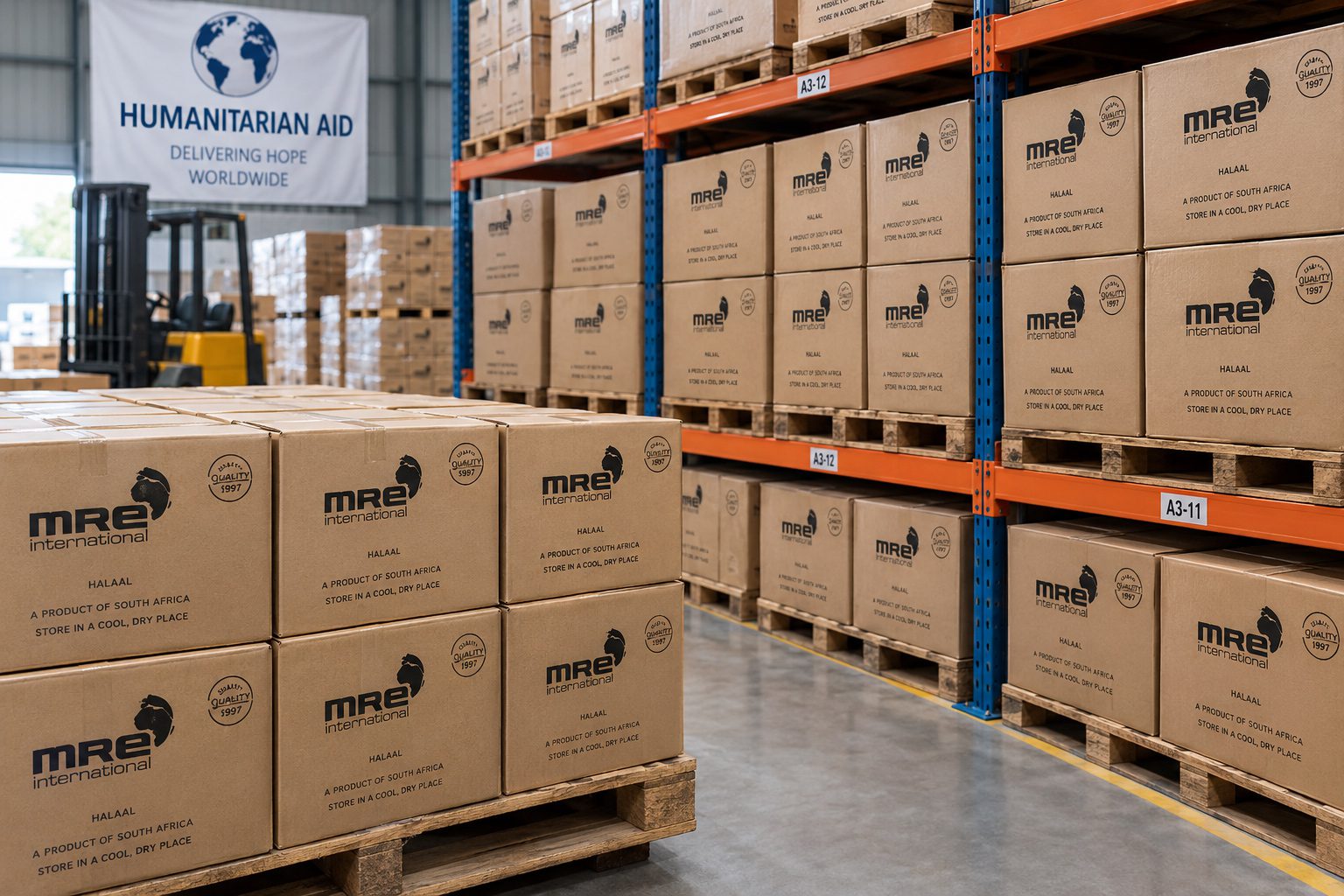
- Scalable ordering: From single units through to palletized bulk orders for large crews
- Predictable cost: Per-meal pricing is fixed; no hidden labor, fuel, or cold chain costs
- Long shelf life: Up to 5 years when stored correctly, making stockpiling and pre-positioning viable
- Dietary options: Halal, vegetarian, and vegan variants available for diverse workforces
MRE International supplies three ranges to match different operational demands: the Essential Range for short-term relief and basic sustenance, the Core Range for full daily rations with flameless heating and hydration support, and the Elite Range for extended missions and high-demand environments.
Head-to-Head Comparison
For procurement teams evaluating both options side by side, here’s how they stack up across the factors that matter most in remote African operations:
| Factor | Mobile Field Catering | MRE Ration Packs |
| Infrastructure needed | High (kitchen, cold chain, water, fuel) | None |
| Lead time to deploy | Days to weeks | Hours to days |
| Cost per meal | High (labor + logistics + cold chain) | Predictable, fixed per-unit |
| Shelf life | Days | Up to 5 years |
| Dietary flexibility | Limited in remote areas | Halal, vegan, vegetarian available |
| Deployment speed | Slow | Immediate |
| Supply chain risk | High | Low |
| Scalability | Complex to scale up/down | Simple: order more or less |
| Infrastructure failure risk | High | None |
The more remote and unpredictable your operating environment, the wider the gap between these two options becomes. Ration packs don’t just win on cost in those conditions; they win on reliability, speed, and risk.
Read the full post on Why Military MREs Are the Gold Standard.
When Field Catering Makes Sense
Field catering isn’t the wrong choice in every situation. For long-term, semi-permanent camps with stable road access, it can genuinely improve workforce morale and retention. Fresh food, variety, and communal dining matter for teams on extended rotations, and a well-run catering operation delivers an experience that ration packs can’t replicate.
Consider field catering when:
- Your camp has been operational for 12+ months with reliable supply routes
- You have the infrastructure budget to absorb kitchen build-out and cold chain costs
- Your workforce is large enough (typically 100+ personnel) to justify a dedicated catering team
- Access routes are predictable and not subject to seasonal closures or security restrictions
- Morale and retention are a priority and fresh food is a stated workforce expectation
In these scenarios, a professional catering contractor with HACCP-compliant food systems and local sourcing networks can deliver genuine value. The key word is “stable.” When conditions change, even temporarily, the entire system is exposed.
When Ration Packs Win
For most remote operations across Africa, military MRE packs are the more practical and lower-risk default.
They’re the right call when:
- You’re deploying fast: Exploration teams, security contractors, and disaster relief organizations rarely have weeks to mobilize a catering setup
- Your site has no utilities: No electricity, no refrigeration, no reliable water means no viable cold chain
- Access is unpredictable: Seasonal flooding, road closures, or security restrictions make regular resupply runs a gamble
- You need surge capacity: Ration packs can be pre-positioned and scaled up overnight without additional infrastructure
- Your operation is short-duration: For missions under 30 days, the cost of standing up a catering operation rarely makes financial sense
Many experienced operations managers use a hybrid model: ration packs as the primary or contingency supply, supplemented by catering when conditions allow. This approach eliminates single points of failure in the food supply chain.
Africa-Specific Considerations
Most content on this topic is written for Western military contexts. It doesn’t account for the realities of operating across sub-Saharan Africa, where the logistics environment changes the calculation significantly.
Supply Chain and Import Logistics
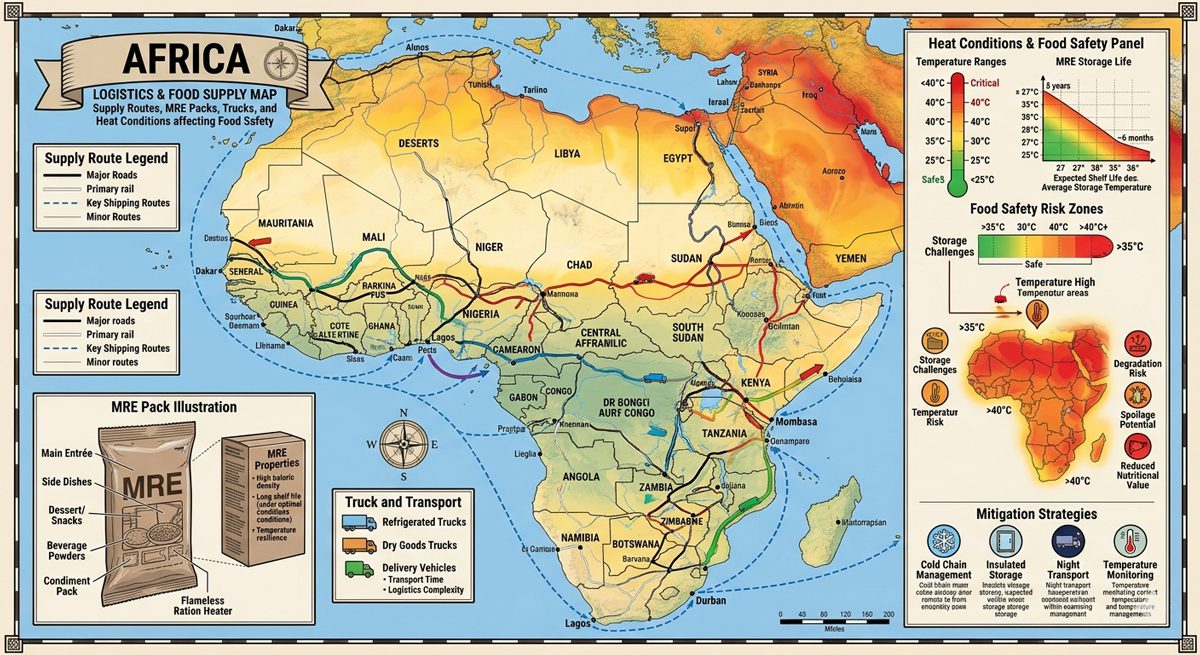
Importing perishable food into many African countries involves cold chain continuity across multiple border points, customs delays that can stretch days, and limited refrigerated transport in secondary markets. Shelf-stable MRE packs, by contrast, clear customs without temperature requirements and can be warehoused locally for months without degradation.
Heat and Humidity Impact on Food Safety
Ambient temperatures across much of Central and West Africa regularly exceed 35°C. This accelerates spoilage in any fresh food supply chain and creates serious food safety risks if cold chain integrity is broken even briefly. Quality MRE packs are engineered to remain shelf-stable at temperatures up to 38°C for extended periods, removing this risk entirely.
Regional Distribution
MRE International distributes from certified facilities in Benoni, South Africa, with nationwide and cross-border delivery capability across the region. For operations in southern and central Africa, this means shorter lead times and lower import complexity than sourcing from European suppliers, without sacrificing product quality or certification standards.
Making the Right Call for Your Operation
The decision framework is straightforward: if your site has stable infrastructure, reliable access, and a long-term presence, field catering is worth evaluating. If any of those conditions are uncertain, food ration packs are the lower-risk, lower-cost, and faster option.
For most remote operations across Africa, that means MRE packs as the default, with catering as a supplement where it’s genuinely feasible, not the other way around.
If you’re sourcing emergency food supply, planning a bulk order for a field deployment, or want to evaluate which pack tier fits your operation, contact the MRE International team for a bulk quote or for more information.
FAQS
In most remote or off-grid environments, yes. MRE ration packs have a fixed, predictable per-unit cost with no infrastructure overhead. Field catering requires kitchen equipment, cold chain logistics, trained staff, fuel, and regular resupply runs, all of which add cost that is rarely fully accounted for in initial procurement budgets.
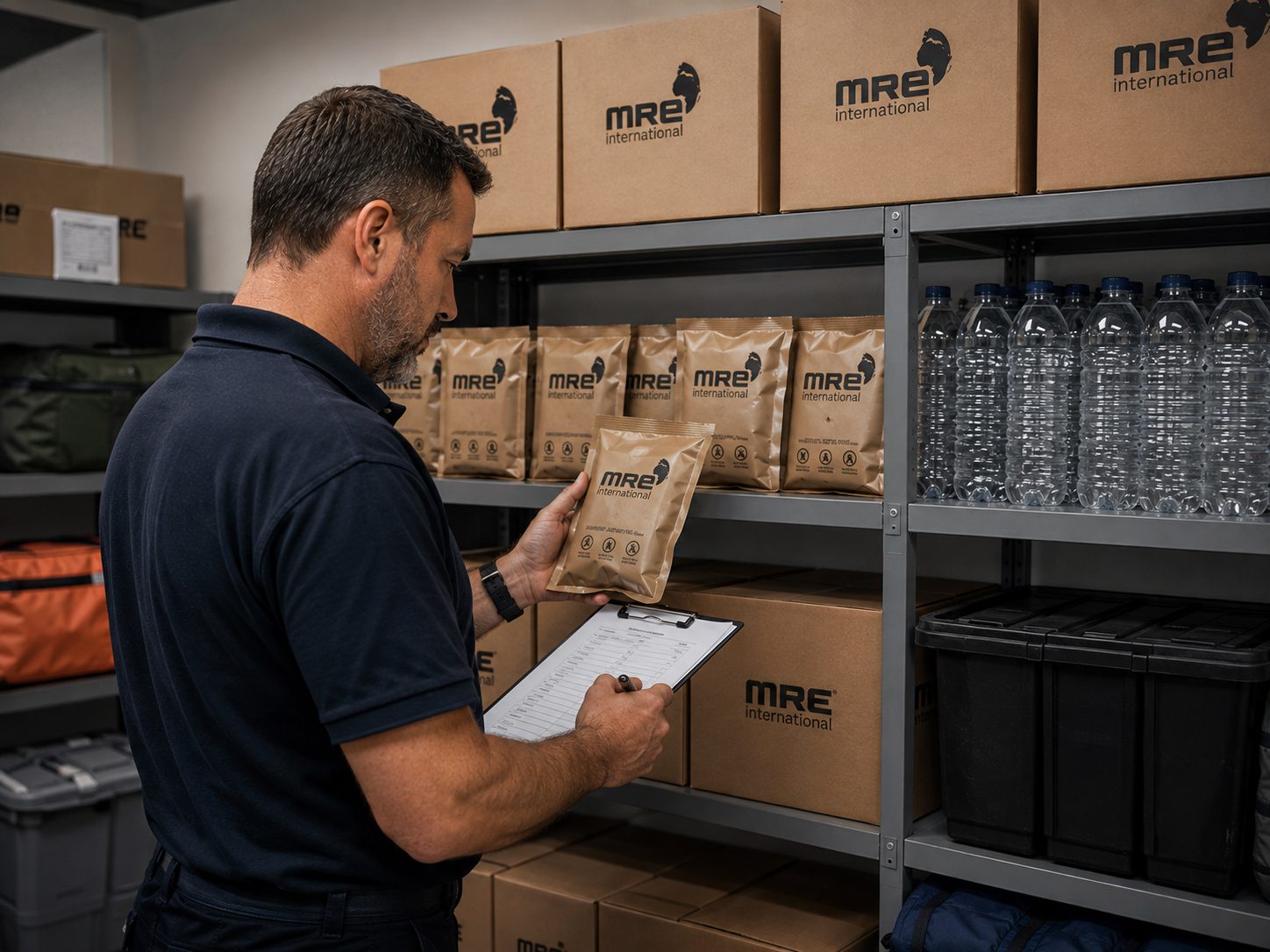
Quality food ration packs have a shelf life of up to 5 years when stored correctly, away from direct sunlight and at temperatures below 25°C. This makes them viable for pre-positioning, stockpiling, and emergency food supply applications where long storage is a requirement.
Yes. MRE packs are engineered to remain shelf-stable at temperatures up to 38°C for extended periods, making them suitable for deployment across sub-Saharan Africa. Flameless ration heaters function without electricity or water, ensuring hot meals in any environment.
The Essential Range covers basic sustenance for short-term use. The Core Range provides a full daily ration with flameless heating and hydration support, suited to military, security, and field operations. The Elite Range is a premium, comprehensive field ration for extended missions and high-demand environments.
Yes. MRE International supplies single units, bulk orders, and palletized quantities for organizations and government clients, with cross-border distribution from South Africa. Contact us to discuss volume pricing and lead times for your operation.