Emergency Food Supply

A Complete Guide to Modern Food Ration Packs

Key Takeaways:

  • Modern food ration packs provide complete, shelf stable nutrition for demanding operational and emergency environments.
  • The right MRE ration pack balances nutrition, portability, shelf life, and operational requirements.
  • Food ration packs combine meals, hydration, snacks, and accessories to support performance in the field.
  • Choosing the correct MRE depends on mission duration, workload, climate, and dietary requirements.
  • Modern MRE meals can be tailored to meet halal, vegetarian, vegan, and operational needs.
  • Understanding ration pack contents helps organizations choose food solutions that improve readiness and efficiency.

What’s Inside an MRE Ration Pack? A Guide to Modern Food Ration Packs

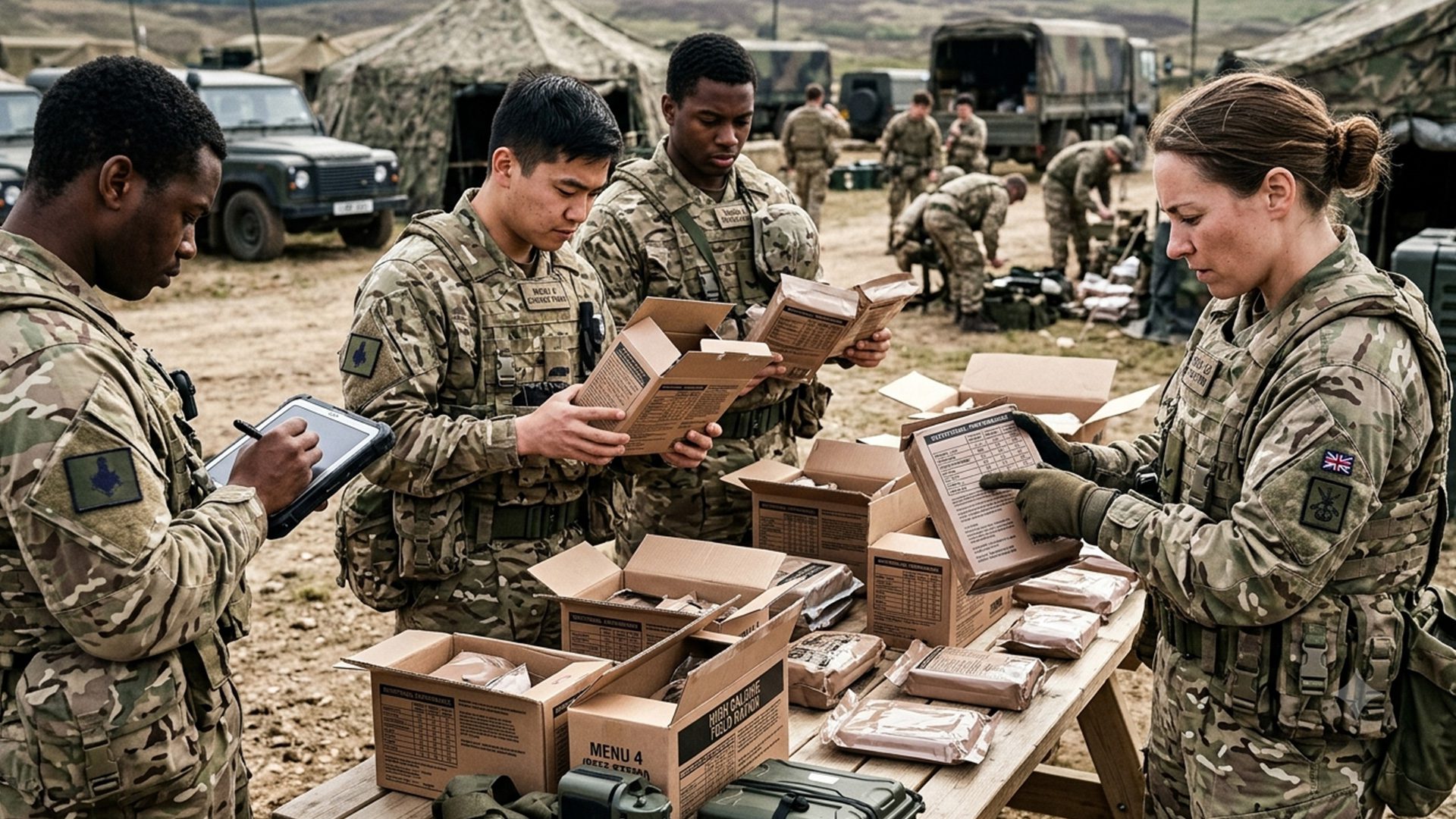
When food preparation facilities, refrigeration, and conventional catering are unavailable, food ration packs provide a practical way to deliver dependable nutrition. However, an MRE ration pack is more than a sealed main meal. It is a carefully assembled food system containing complementary components for energy, hydration, convenience, and field use. Military units, humanitarian organizations, emergency response teams, and remote industrial workforces rely on MRE ration packs because they are compact, easy to distribute, and ready to use in demanding conditions. But what exactly should you expect to find when you open one? This guide examines the individual components inside modern food rations, using MRE International’s Essential Range as a practical example. It also explains how menus can be adapted for operational needs, including halal, vegan MRE, and vegetarian MRE requirements.

What Does MRE Stand For?

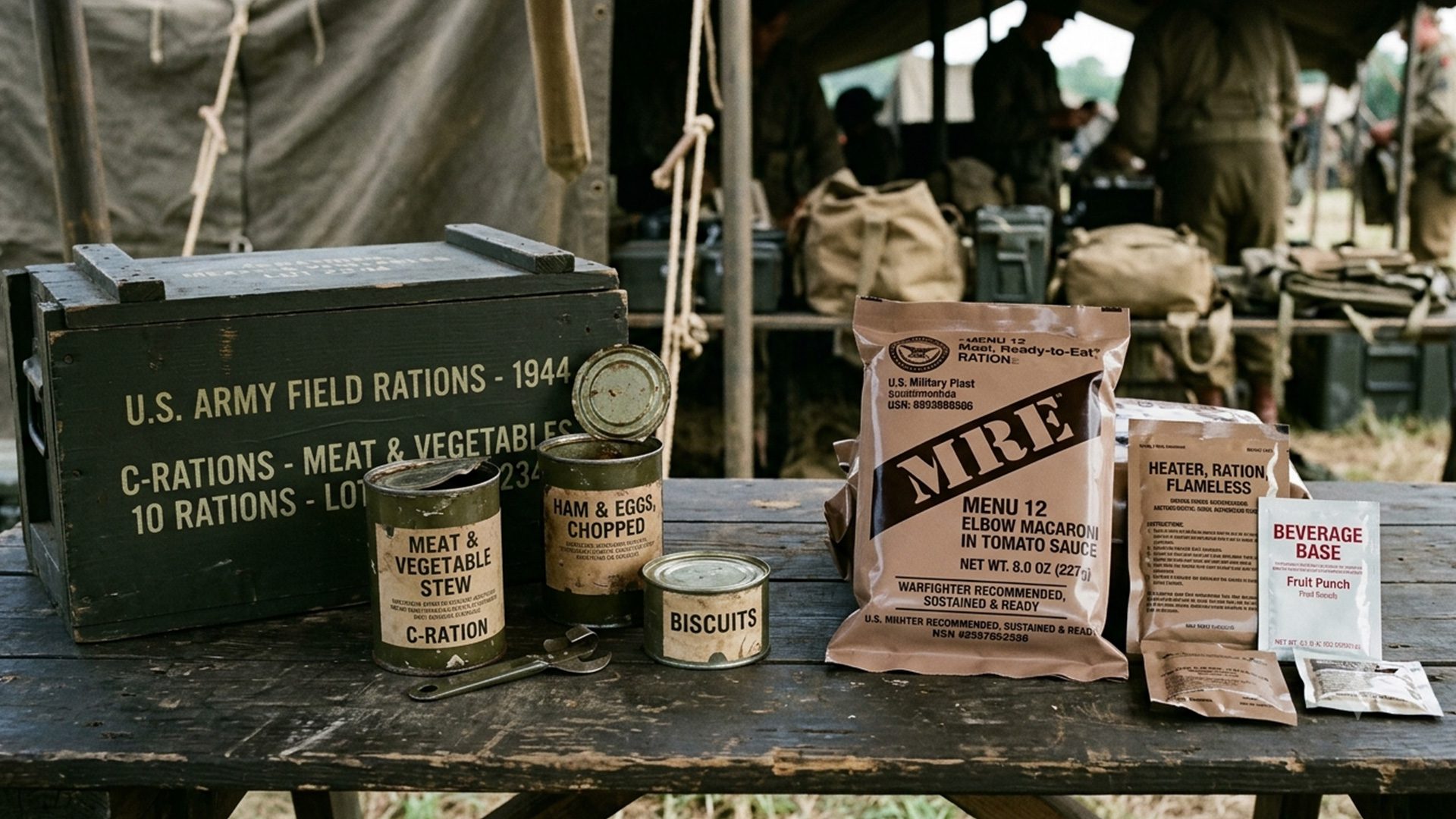
MRE stands for Meal, Ready to Eat. The term describes a fully prepared meal that can be eaten without access to a conventional kitchen. MREs evolved from earlier military field rations that focused primarily on durability and basic sustenance. Modern MRE meals offer greater menu variety, improved packaging, and more flexibility for different dietary and cultural requirements. Read the blog on MRE Meals Explained.

The Core Components of Food Ration Packs

The contents vary according to pack type, deployment duration, and intended user. However, most complete ration packs combine several core elements.

A Ready-to-Eat Main Meal

The entrée is generally the centerpiece of the pack and provides a substantial portion of its energy and protein.

Examples may include:

  • Beef, chicken or fish-based dishes
  • Rice and meat combinations
  • Pasta dishes
  • Beans or legumes
  • Vegetarian stews
  • Plant-based meals

The best MRE meals are not selected on taste alone. The entrée should be appropriate for the climate, storage period, user group, and physical demands of the operation.

Some meals can be eaten directly from their packaging, while more comprehensive ration systems may include a flameless heater for warming them in the field.

Carbohydrates for Sustained Energy

Carbohydrate components complement the main meal and help provide accessible energy during physically demanding work.

Common examples include:

  • Rice
  • Pasta
  • Crackers
  • Biscuits
  • Instant porridge

Protein Sources

Protein may come from meat, poultry, fish, beans, soy, or other plant-based ingredients.

A pack intended for a remote workforce may contain familiar meat-based products, while a humanitarian deployment may require several menu configurations to accommodate religious, cultural, or dietary preferences.

A vegetarian MRE may use beans, lentils, soy, or meat-free pasta dishes. A vegan MRE excludes animal-derived ingredients while still being designed to deliver practical field nutrition.

Explore Food Ration Packs for Special Diets.

Snacks and Energy Boosters

Snacks give users flexibility to consume smaller items between main meals or during movement. These components are especially useful when personnel cannot stop for a full meal.

Depending on the ration design, these may include:

  • Energy bars
  • Biscuits
  • Dried fruit
  • Nuts or spreads
  • High-energy porridge

Drinks and Hydration Components

Modern food ration packs may contain several beverage options to support hydration and provide variety.

Examples include:

  • Coffee
  • Tea
  • Isotonic drink sachets
  • Electrolyte beverages
  • Powdered fruit drinks

Accessories and Utility Items

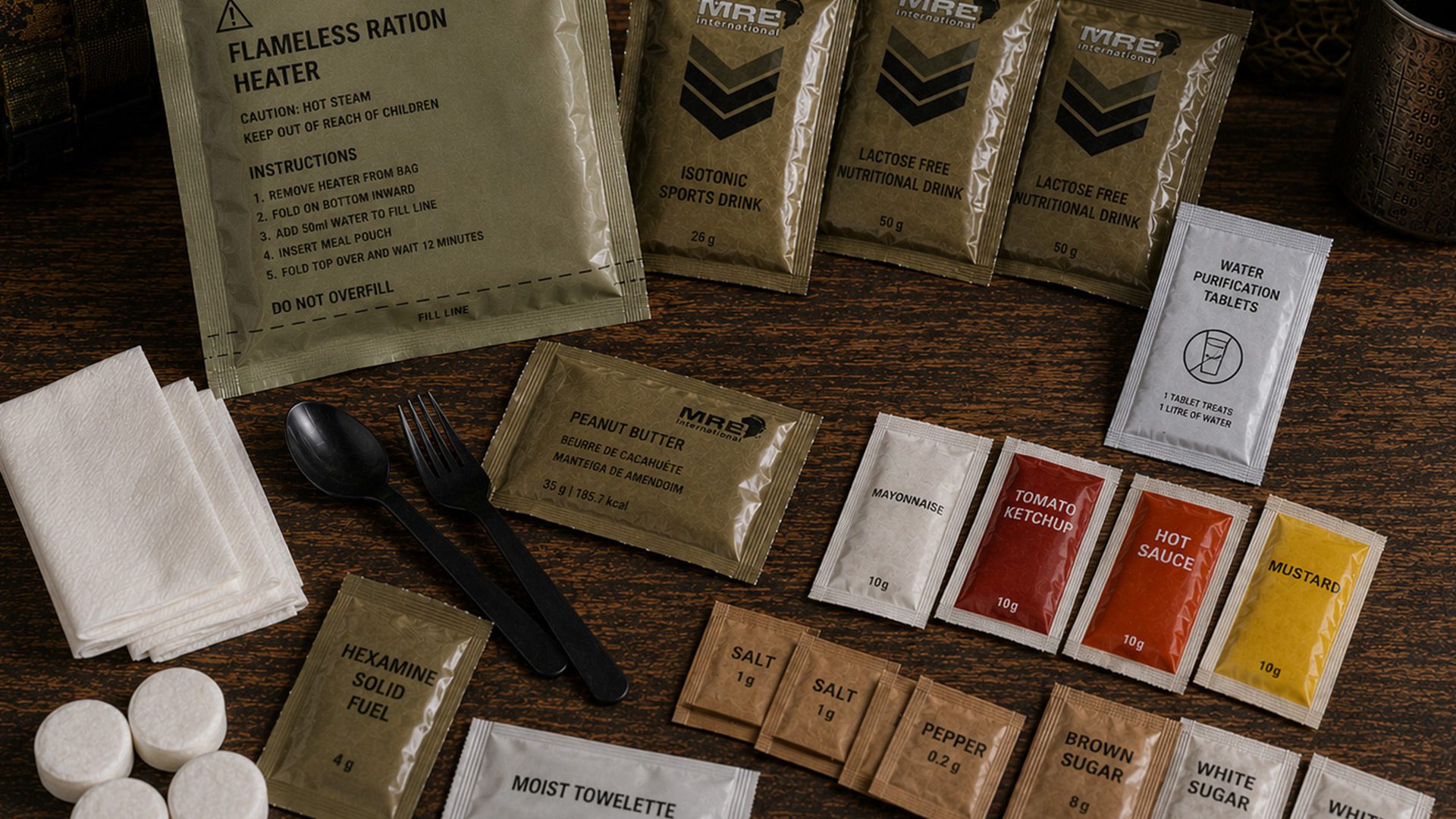
A ration pack must remain usable even when no kitchen equipment is available. It may therefore include:

  • Cutlery
  • Wet wipes, napkins or tissues
  • Salt, pepper and sauces
  • Water-purification products
  • Matches or fuel tablets
  • Heating bags
  • Flameless ration heaters.

Essential Range Example: What Can One Pack Contain?

MRE International’s Essential Range provides a useful example of how individual foods are combined into compact food rations.

Pack component Essential Range exampleOperational role 
Protein and main foods Corned meat, pilchards and baked beans Substantial food components for convenient field consumption 
Light meal component Instant beef and vegetable soupWarm, easy-to-prepare supplementary food 
Breakfast or energy itemChocolate instant porridge Convenient carbohydrate-based meal component
Hydration supportGrape isotonic drink sachetFlavoured hydration support during activity 
Pack formatCompact collection of shelf-stable productsSimplifies transport, storage and distribution 

The Essential Range is intended primarily for short-term sustenance and emergency-relief applications. More advanced Core and Elite packs include fuller cooked meals and additional field-use equipment for longer or more intensive operations. 

How MRE Meals Are Designed for Operational Use

Pack Contents Must Match the Mission

A pack intended for a one-day security deployment will differ from one designed for extended disaster relief. Procurement teams should consider:

  • Deployment duration
  • Expected workload
  • Climate and storage conditions
  • Access to safe water
  • Heating availability
  • Transport capacity
  • Religious and dietary requirements
  • Waste and packaging limitations

Portability and Distribution Matter

Compact components are easier to palletize, transport, and issue to personnel. This becomes particularly important when organizations must move hundreds or thousands of packs to remote or disrupted locations.

Shelf Life Must Be Confirmed

Shelf life varies by product, packaging, and storage conditions. Buyers should check the individual product specifications, batch information, and recommended storage temperatures rather than assuming every component will remain usable for the same period.

Nutrition Inside an MRE Ration Pack

There is no single calorie figure that applies to all MRE ration packs. A single-meal pack, short-duration kit, and complete 24-hour ration serve different purposes.

Instead of comparing packs only by total calories, procurement teams should assess:

  • Total energy per pack
  • Protein content
  • Carbohydrate and fat balance
  • Number of eating occasions
  • Hydration components
  • User workload
  • Deployment duration

Learn more about What Goes Into a MRE Meal.

Build Your Own Menu with Custom Ration Packs

Standard menus are useful, but they may not suit every organization.

MRE International’s custom ration pack offering allows customers to build menus around specific requirements, including:

  • Preferred meals and snacks
  • Calorie or nutritional targets
  • Vegetarian, vegan or halal requirements
  • Heating equipment
  • Hydration products
  • Packaging and branding

Choose Food Ration Packs Built Around Your Operation

Modern food ration packs combine meals, energy components, drinks, and practical accessories into one transportable system. Their value lies not only in shelf life but also in how effectively every component supports the people, environment, and duration of a deployment.

Contact MRE International to discuss standard, bulk, or custom ration pack solutions for your next deployment.

FAQs

Are MRE meals fully cooked?

Ready-to-eat entrées are generally fully prepared and can be consumed without conventional cooking. Some packs include heating systems for users who prefer a hot meal.

How long do MRE meals last?

Shelf life varies according to the product, packaging, and storage temperature. Check the stated shelf life and storage guidance for every component.

Are halal MREs available?

Yes. Halal ration configurations are available for organizations requiring meals that meet halal dietary standards.

Can civilians purchase MRE ration packs?

Yes. Food ration packs can be used by civilians, outdoor enthusiasts, companies, preparedness planners, and organizations operating in remote environments.

Latest Articles

A Complete Guide to Modern Food Ration Packs

A Complete Guide to Modern Food Ration Packs

Key Takeaways: Modern food ration packs provide complete, shelf stable nutrition for demanding operational and emergency environments. The right MRE ration pack balances nutrition, portability, shelf life, and operational requirements.…

Choosing Army Ration Packs Based on Nutritional Performance

Choosing Army Ration Packs Based on Nutritional Performance

Key Takeaways: Nutrition directly impacts endurance, recovery, decision-making, and overall mission success. Calorie count alone is not enough. Nutrient balance drives operational performance. Mission type and environment should determine ration…

The Evolution of Military Rations: From Canned Meals to MREs

The Evolution of Military Rations: From Canned Meals to MREs

Key Takeaways: Military rations evolved to improve nutrition, mobility, and operational efficiency. Lightweight ration packs transformed military logistics and troop mobility. Modern MREs deliver reliable nutrition without refrigeration or preparation.…